
Diving and snorkeling are the reason most travellers book a phinisi liveaboard in the first place. Understanding how dive days are structured, what certification you need, and what gear is provided helps you pick the right trip and pack correctly.
Diving certification levels
Most liveaboard diving is open to anyone holding an Open Water certification or higher, since many dive sites in Indonesia's Coral Triangle involve moderate to strong currents. Advanced Open Water certification, or equivalent logged experience, is commonly recommended or required for current-swept sites such as those in Komodo's central corridor or Raja Ampat's Dampier Strait.
A typical dive day
Most liveaboards run two to four dives a day, briefed and led by a dive guide in small groups. A typical day includes an early morning dive, a mid-morning dive, an afternoon dive, and sometimes a night dive, with surface intervals for rest, meals and moving the vessel between sites. Snorkelers on the same trip usually have the option to join the tender for a surface swim over the same reef, rather than diving with the group.
Many of Indonesia's best shallow reef areas, including parts of Raja Ampat's lagoons and Komodo's coral gardens, are excellent for snorkeling and do not require any diving qualification at all.
What diving equipment is usually included
Most phinisi liveaboards include tanks, weights and a weight belt as standard for certified divers. Buoyancy control devices and regulators are commonly available for rent if you do not travel with your own. Wetsuits, if needed at all given Indonesia's warm water, are often available too.
Personal dive computers, Nitrox fills, underwater cameras and specialist equipment such as reef hooks are frequently charged separately or not provided, so confirm this with the operator before your trip.
Snorkeling gear and access
Mask, snorkel and fins are typically included for all guests, divers and non-divers alike. Because snorkeling requires no certification and minimal equipment, it is one of the easiest ways for mixed groups, families, and travellers of different experience levels to share the same liveaboard itinerary.
Guide ratios and dive briefings
Dive groups on a phinisi liveaboard are usually small, often four to six divers per guide, allowing for a proper site briefing covering entry and exit points, expected currents, depth range and marine life to look out for. Ask the operator about their typical guide-to-diver ratio if group size and personal attention matter to you.
Marine life you might encounter
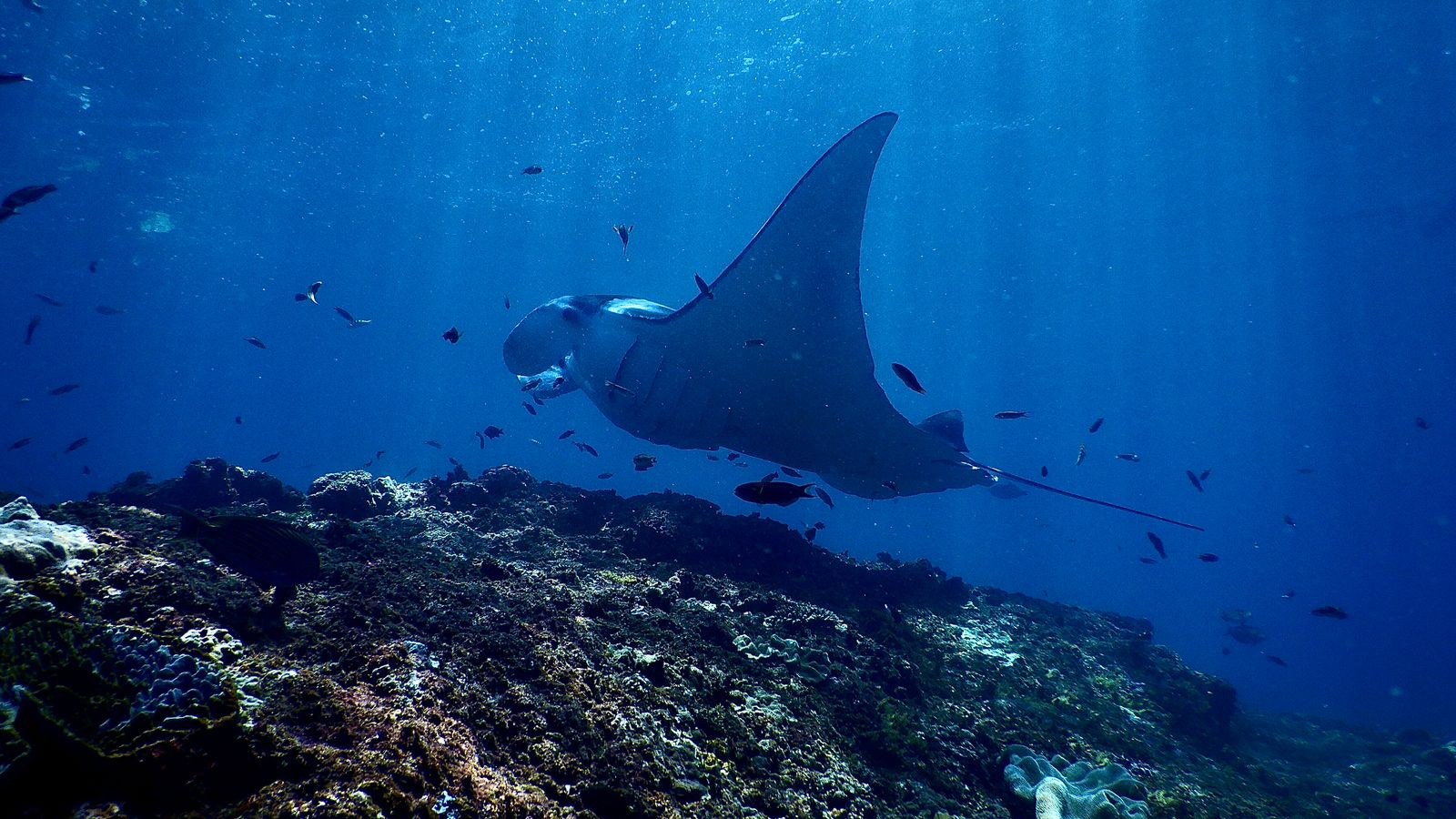
Indonesia's dive sites sit within the Coral Triangle, home to an exceptional range of marine life: reef sharks, manta rays at cleaning stations, schooling fish, macro life such as nudibranchs and pygmy seahorses, and some of the highest recorded coral diversity anywhere in the world. What you are likely to see depends heavily on the specific region and season, covered in more detail in our destination-specific guides.
Quick answers
Do I need to be an advanced diver to join a liveaboard? No. Many itineraries include a mix of site difficulty, and operators can often match easier sites to less experienced divers within the same trip.
Can non-divers still enjoy a diving-focused liveaboard? Yes. Snorkeling, topside activities and simply enjoying the scenery are common alternatives built into most itineraries.
Should I bring my own dive gear? Bringing your own mask, and a dive computer if you use one regularly, is common practice. Tanks, weights and often buoyancy control devices are usually provided.