
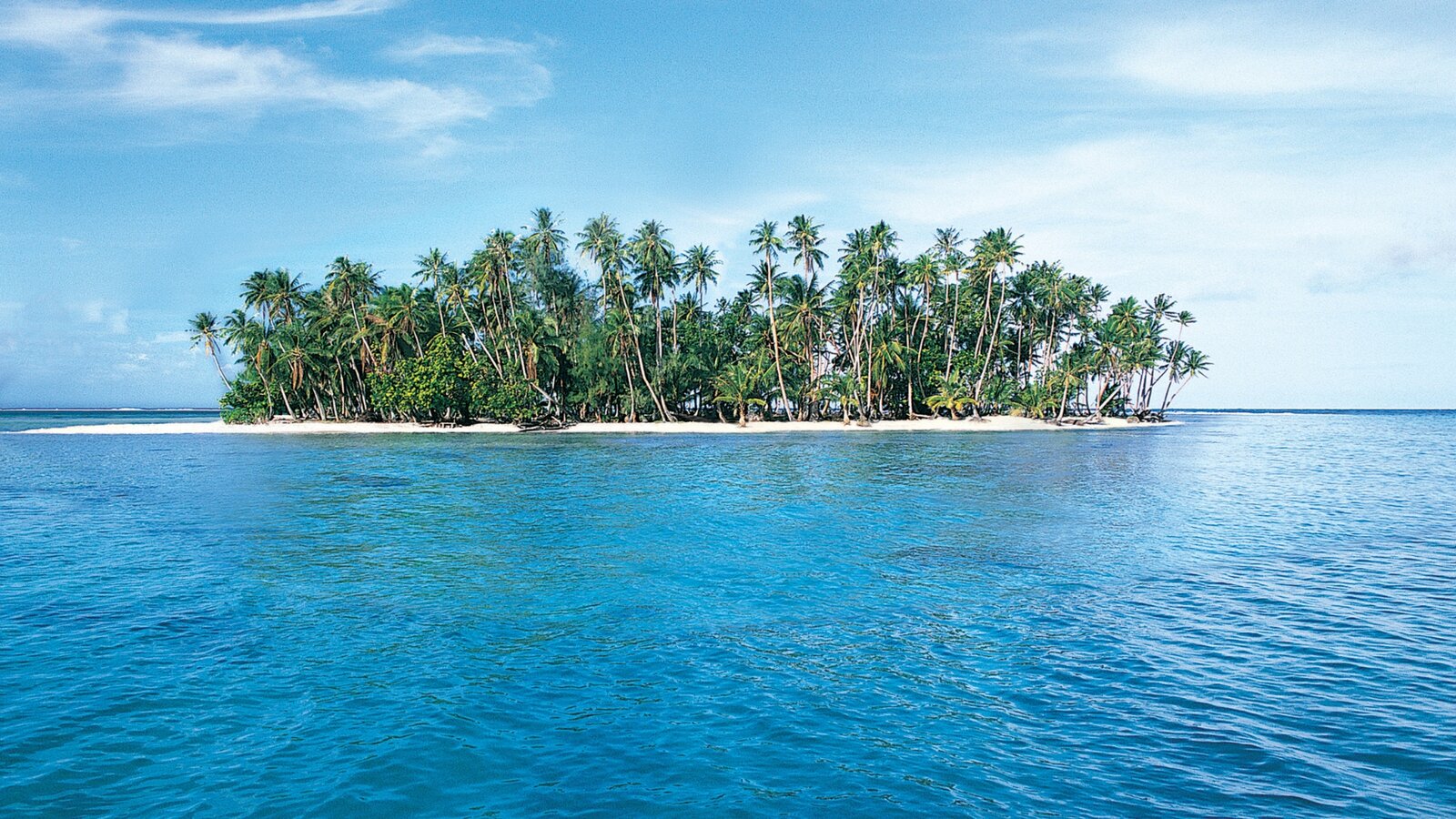
Triton Bay
Why visit Triton Bay
Triton Bay's appeal extends well past its underwater residents, into some of West Papua's least-visited coastline and forest.
Triton Bay sits on the southern coast of West Papua, inside the Kaimana Marine Protected Area, a designation covering roughly six thousand square kilometers established in 2008. First properly surveyed only in 2006, the bay remains one of Indonesia's least-dived regions, with new dive sites still being found. Most voyages depart from or connect through Kaimana, and combine reliable whale shark encounters at traditional fishing platforms with some of the densest soft coral growth found anywhere in the Coral Triangle. Trip length, exact route, and marine activities depend on the vessel and operator.
The bay is ringed by rugged islands and coastal wetlands that have remained largely undeveloped, giving trips here a sense of genuine discovery rather than a well-trodden circuit. Above the surface, a waterfall pouring directly into the sea at the base of the Kumawa Mountains and ancient cliff paintings at Namatota give non-diving days real substance, not filler between dives. For travellers drawn to remoteness as much as marine life, Triton Bay is among the least crowded phinisi destinations in Indonesia.
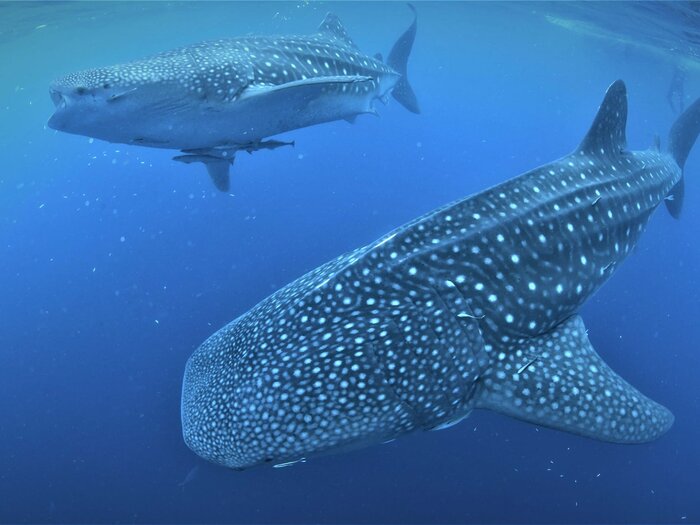
Whale sharks at the surface
Encounters at traditional bagan fishing platforms are calm, unhurried, and accessible to snorkelers, not just certified divers.
A true frontier destination
First surveyed only in 2006, with new dive sites still being discovered, and few other liveaboards operating in the area.
Waterfall meets the sea
The Kiti-Kiti Waterfall at the base of the Kumawa Mountains flows directly into the ocean, a rare topside sight reachable by tender.
Ancient cliff art
Prehistoric rock paintings at Namatota offer a cultural dimension uncommon among Indonesia's marine destinations.
Where the trip typically goes
Triton Bay voyages generally move between a small number of anchorage areas, each offering a different mix of soft coral reef, whale shark access, and topside excursions.
The Bagan Platforms
Traditional fishing platforms where whale sharks gather to feed on baitfish drawn by the fishermen's nets and lights, offering calm, close encounters for both divers and snorkelers, typically timed around the new moon.
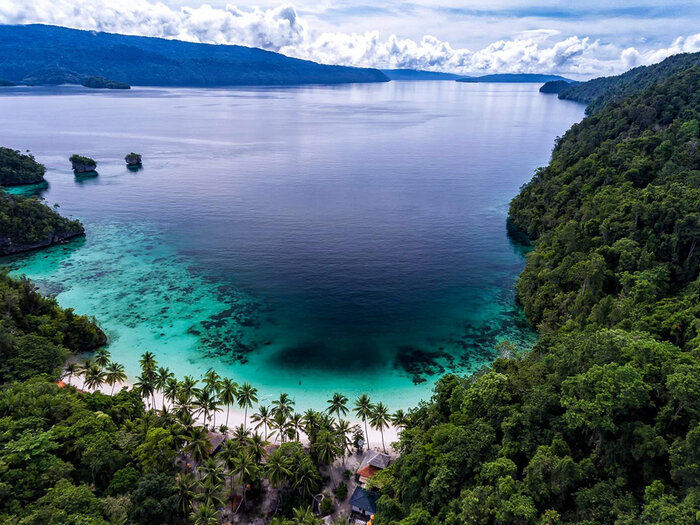
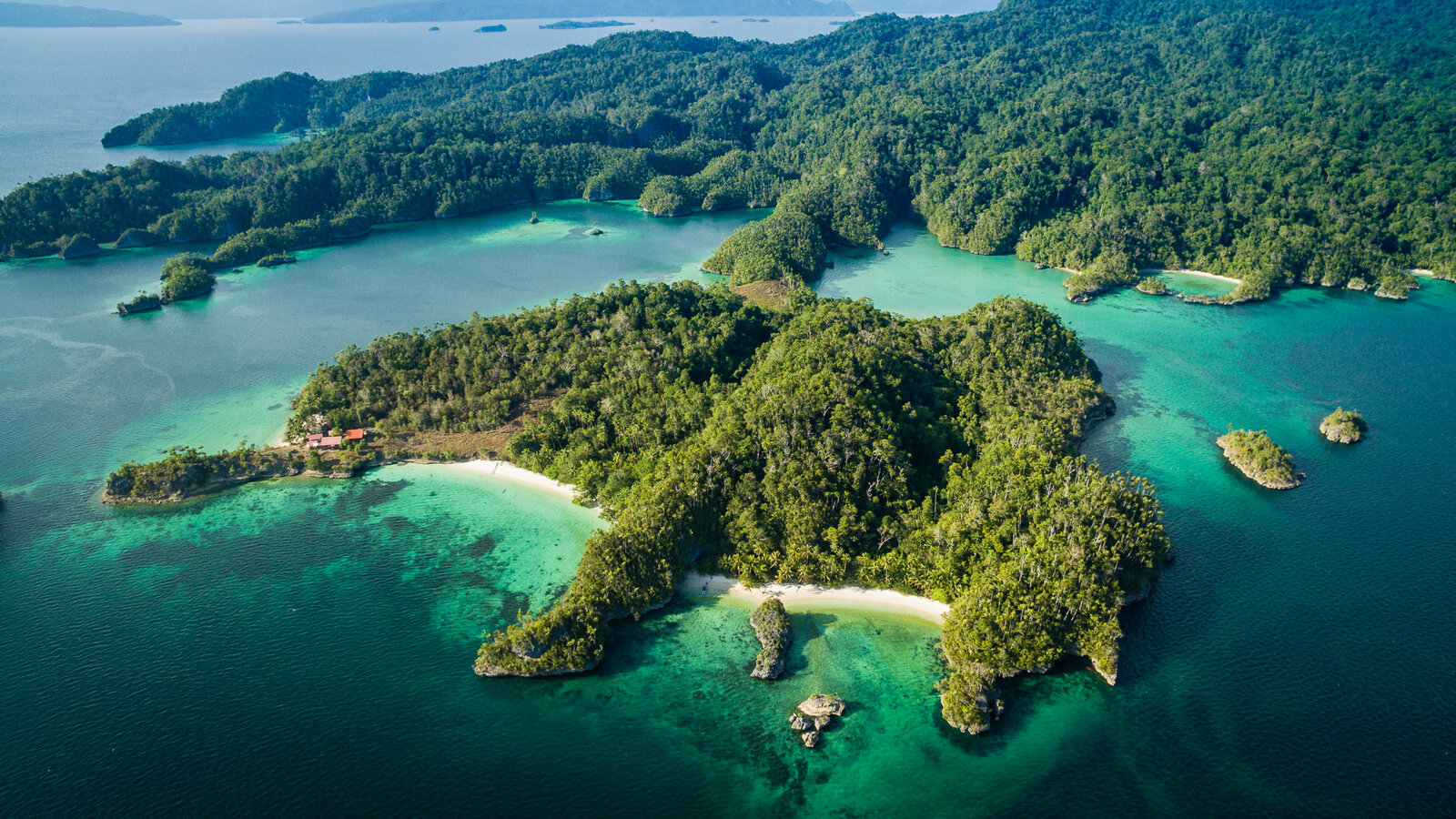
Aiduma Island
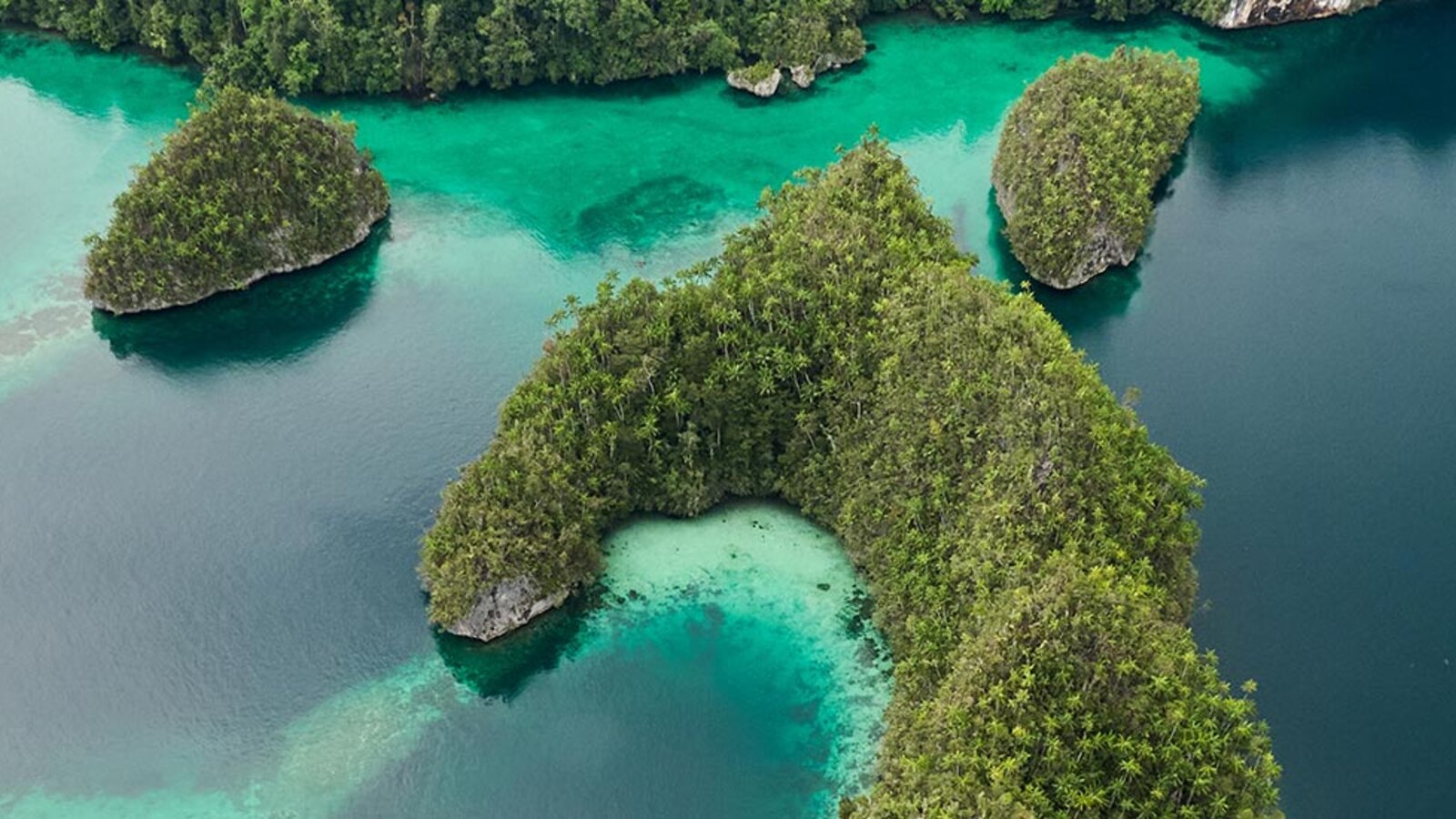
Home to the region's only dive resort and numerous small coves and underwater formations along the island's karst coastline, serving as a common anchorage point for liveaboards moving through the bay.
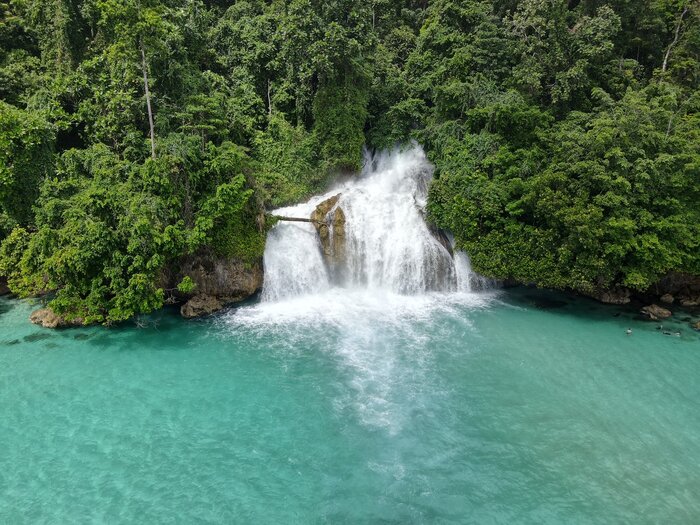
Namatota and the Kumawa Coast
Home to ancient cliff paintings and the Kiti-Kiti Waterfall, which flows directly into the sea, alongside some of the bay's densest soft coral growth and its endemic walking shark species.
Marine life and dive sites
Compiled from public dive references and kept current by PhinisiGO.
Triton Bay's combination of nutrient-rich upwellings and largely unexplored reef makes it one of the more unpredictable regions to dive, in the best sense. Whale sharks feeding at fishing platforms are the headline draw, alongside soft coral growth rarely seen at this density elsewhere.
The Bagans of Kaimana
Traditional fishing platforms where whale sharks gather to feed, offering some of Indonesia's calmest and most reliable whale shark encounters, accessible to snorkelers as well as divers.
Aiduma Coves
A series of small coves and underwater formations along Aiduma Island, combining sloping walls, pinnacles, and volcanic boulder topography typical of the wider bay.
Namatota Reefs
Dense soft coral gardens close to the site of ancient cliff paintings, home to the endemic Triton Bay epaulette shark, more commonly known as the walking shark.
Black Coral Forests
Sheltered sites featuring some of the region's largest black coral bushes alongside carpets of soft coral, a signature of Triton Bay's underwater landscape.
Macro Sites
Sandy slopes and current-swept boulders home to four of the seven known pygmy seahorse species, along with frogfish, ghost pipefish, and the wunderpus octopus.
Endemic Species Sites
Locations known for species found nowhere else on Earth, including the Nursalim flasher wrasse and the Triton Bay epaulette shark, both described scientifically only in the past two decades.
Beyond diving
Topside activities that make Triton Bay workable for mixed groups of divers and non-divers.
Kiti-Kiti Waterfall
A waterfall at the base of the Kumawa Mountains that flows directly into the sea, reachable by tender and a short walk.
Namatota cliff paintings
Ancient rock art on the cliffs at Namatota, offering a rare cultural counterpoint to the marine-focused itinerary.
Whale shark snorkeling
Non-divers can join whale shark encounters at the bagan platforms from the surface, without needing scuba certification.
Island and coastal scenery
Rugged karst islands, sheltered bays, and coastal wetlands around Aiduma and Dramai offer quiet exploration by tender between dive sessions.
Getting there
Triton Bay voyages are reached through Kaimana Airport (KNG), typically connecting through Sorong (SOQ) or Makassar (UPG). Some itineraries instead embark in Sorong and sail directly to Triton Bay as part of a longer West Papua route. From Kaimana, the Triton Bay area itself is roughly a two-hour liveaboard transfer, arranged by the operator. Because Kaimana is a small regional hub with limited flight frequency, itineraries here require more advance planning than better-connected departure points such as Sorong or Labuan Bajo.
Liveaboards sailing Triton Bay
Example vessel profiles using the same listing structure as the main Liveaboards page.
Loading liveaboards…
Triton Bay voyage guides
Practical planning topics connected to this destination, without replacing current information from the vessel operator.
Best time to sail Triton Bay
A practical overview of seasons, sea conditions, rainfall, and the periods most commonly used for liveaboard itineraries.
Reaching Kaimana
A simple planning outline for flights, arrival timing, hotel nights, and transfers before joining a Triton Bay departure.
Triton Bay or Raja Ampat?
Compare the two West Papua destinations by access, typical voyage length, marine life, seasonality, and common trip formats.
Triton Bay — frequently asked questions
Independently compiled planning answers, kept current by PhinisiGO.
What is the best time to visit Triton Bay?
October through April generally offers the calmest seas for the crossing to and around Triton Bay. Whale sharks are present at the bagan platforms throughout the year, so the main seasonal consideration is sea comfort rather than the primary wildlife encounter.
How long should a Triton Bay trip be?
Most itineraries run seven to twelve nights, reflecting Kaimana's remote location and limited flight connections. Many operators combine Triton Bay with Raja Ampat or the Banda Sea on extended crossing itineraries.
Do I need to be a certified diver to see the whale sharks?
No. Whale shark encounters at the bagan fishing platforms take place near the surface and are accessible to snorkelers as well as certified divers, making Triton Bay one of the more inclusive whale shark destinations in Indonesia.
What makes Triton Bay's marine life distinct?
Several species found nowhere else on Earth, including the Triton Bay epaulette shark, commonly called the walking shark, and the Nursalim flasher wrasse, both formally described by scientists only in the past two decades.
How remote is Triton Bay compared to other Indonesian dive destinations?
Very remote. Kaimana has a population of around thirteen thousand people, a single dive resort, and a limited number of liveaboards operating in the area, making Triton Bay one of the least visited of Indonesia's major phinisi destinations.
Search Liveaboards in Triton Bay
Compare vessel profiles, listing status, capacity and pricing basis, then send an enquiry to PhinisiGO, your first point of contact for booking.