

Raja Ampat
Why visit Raja Ampat
Diving is what Raja Ampat is best known for, but most people on board are not diving every hour of the day.
Raja Ampat spans more than 1,500 islands off the northwestern tip of West Papua, home to roughly 75% of the world's known coral species. Most voyages depart from Sorong and focus on one or two of three distinct areas — the Dampier Strait, Misool, or Wayag and the Fam Islands — since the region is too spread out for a single liveaboard to cover in one week. Trip length, exact route, and marine activities depend on the vessel and operator.
The scenery alone draws travellers who have never put on a mask — limestone islands rising straight out of turquoise lagoons, empty beaches, and some of the most photographed seascapes in Southeast Asia. Days on a phinisi tend to run at a slower pace than most trips: a morning activity, lunch at anchor, an afternoon to read or swim or nap on deck, sunset with the engines off. For couples, families, and groups travelling together, that rhythm — as much as anything underwater — is usually the reason people come back.
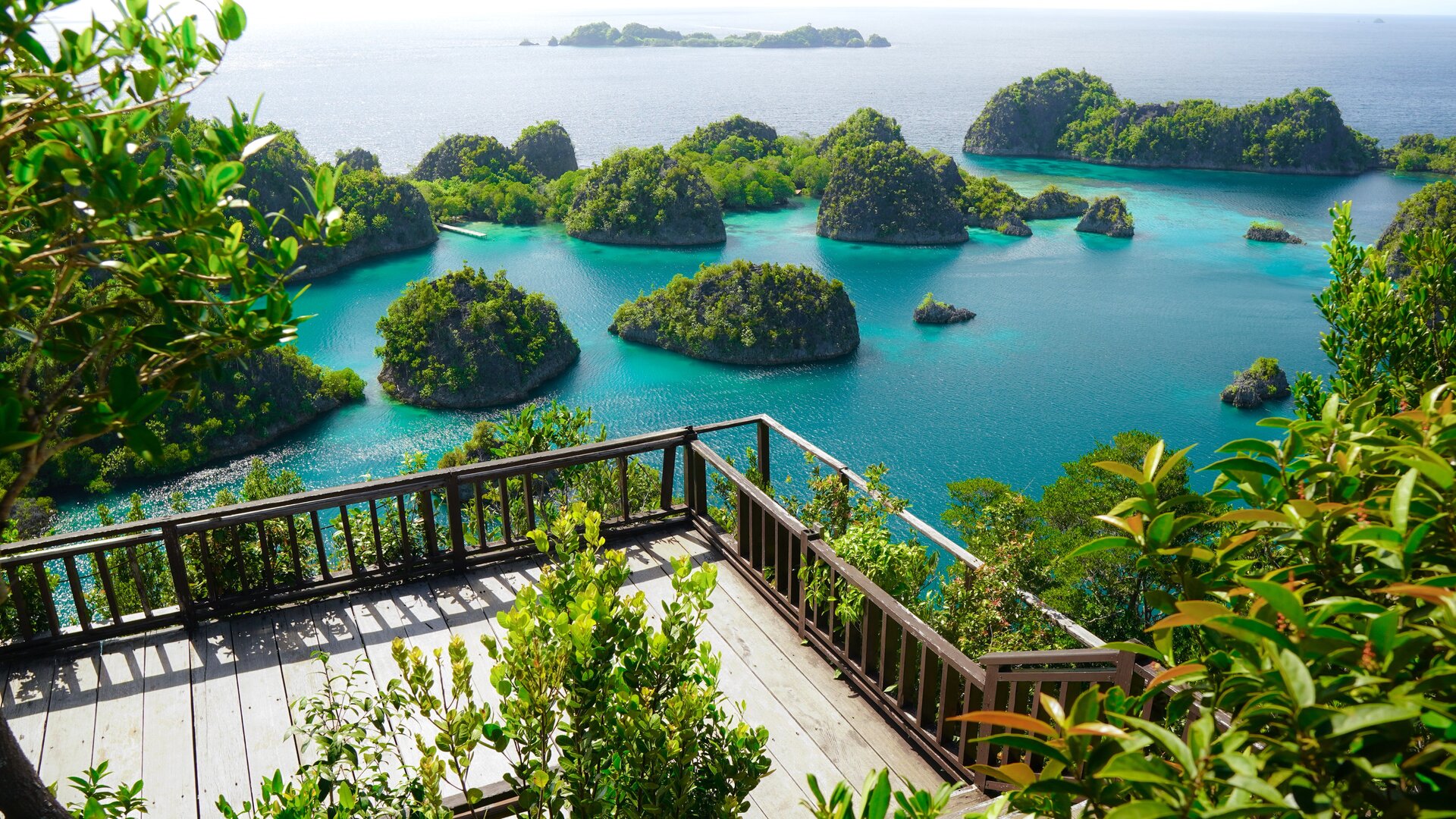
Scenery first
Karst islands and lagoon views that do not require a wetsuit to appreciate — much of it visible straight from the deck.
A genuinely slower pace
No fixed schedule beyond the day's plan. Time at anchor is built in, not an afterthought.
Real remoteness
Reached only by liveaboard. Among the least-crowded corners of the Coral Triangle, even in peak season.
Works for mixed groups
Snorkeling, hiking, kayaking and village visits sit alongside diving, so divers and non-divers can share the same itinerary.
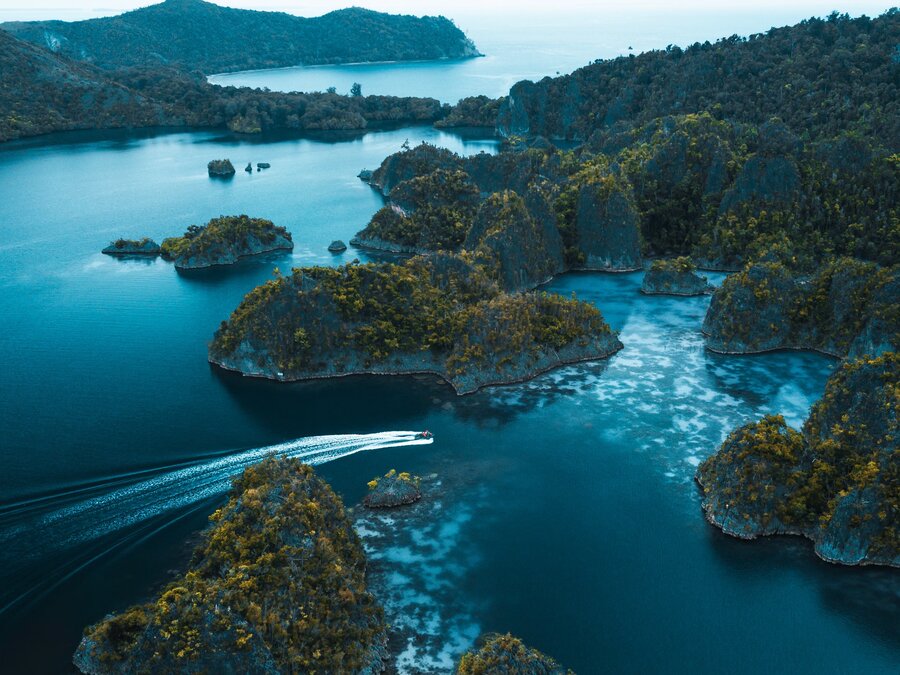
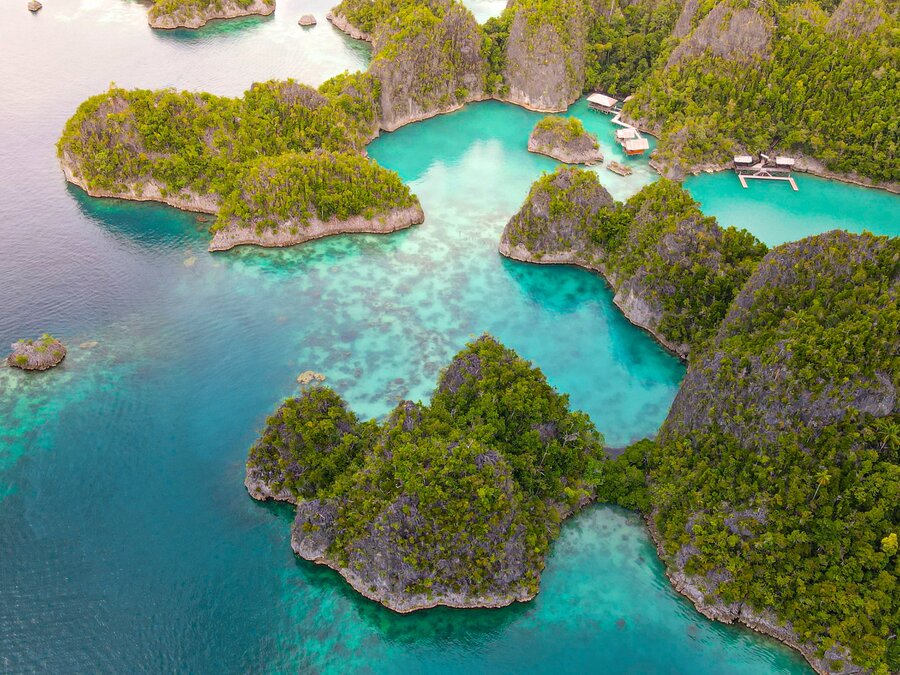
Three regions, three different trips
No single itinerary covers all of Raja Ampat in a week — most voyages focus on one or two of the following areas.
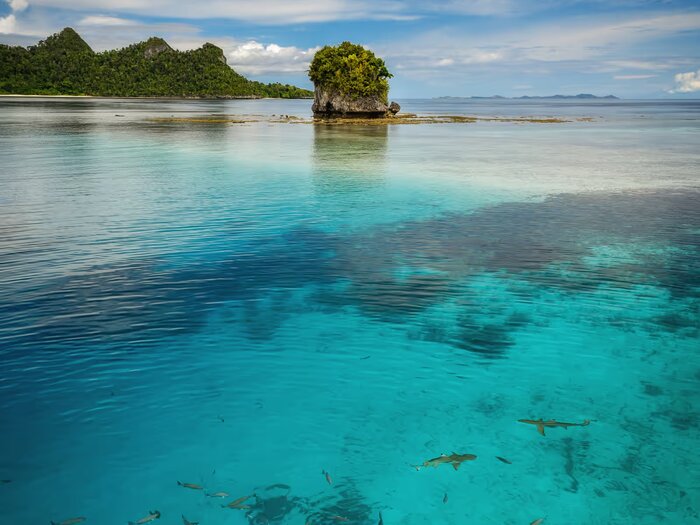
Dampier Strait
The most dived part of the archipelago. Nutrient-rich currents running between Waigeo and Batanta feed well-known sites including Cape Kri, Blue Magic and Manta Sandy, alongside the village and jetty at Arborek.
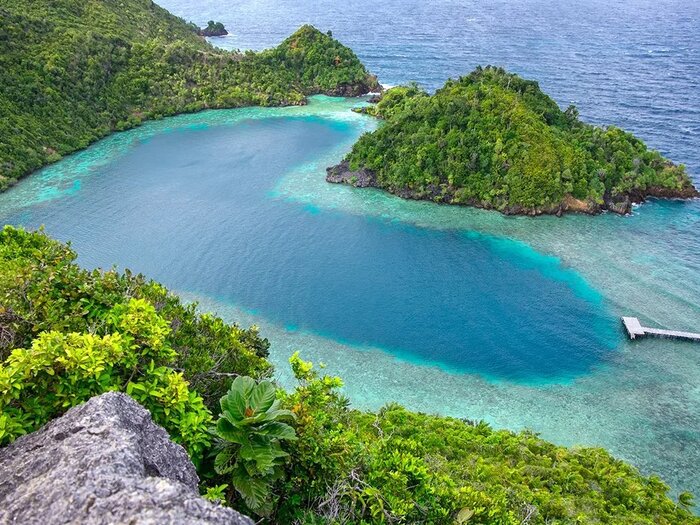
Misool
The most remote of the three, largely inside a protected marine reserve. Known for soft-coral walls, quieter reefs, and manta encounters at sites such as Magic Mountain. Few other liveaboards operate here.
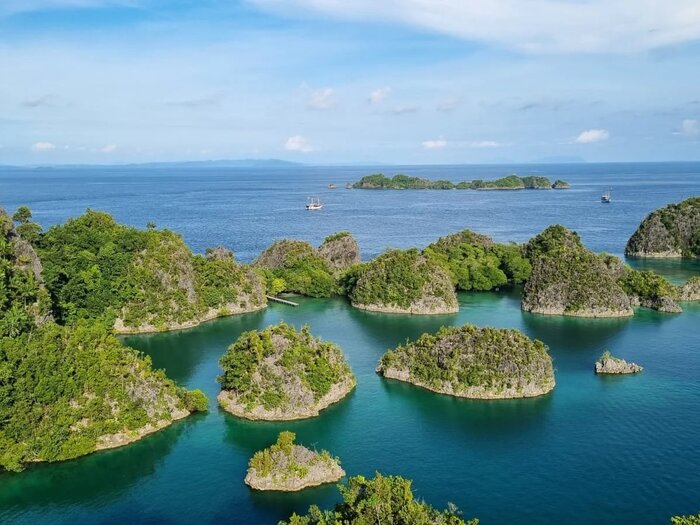
Wayag and Fam Islands
Defined by topside scenery more than diving. The Wayag and Piaynemo viewpoints — limestone karst islets rising from a lagoon, reached by short hikes — are among the most photographed views in Indonesia.
Marine life and dive sites
Compiled from public dive references and kept current by PhinisiGO.
Raja Ampat sits at the heart of the Coral Triangle, and the numbers reflect it. Reef mantas are a particular draw here, with a notably high share of the all-black melanistic form rarely seen elsewhere in Indonesia, most reliably spotted circling the cleaning stations of the Dampier Strait.
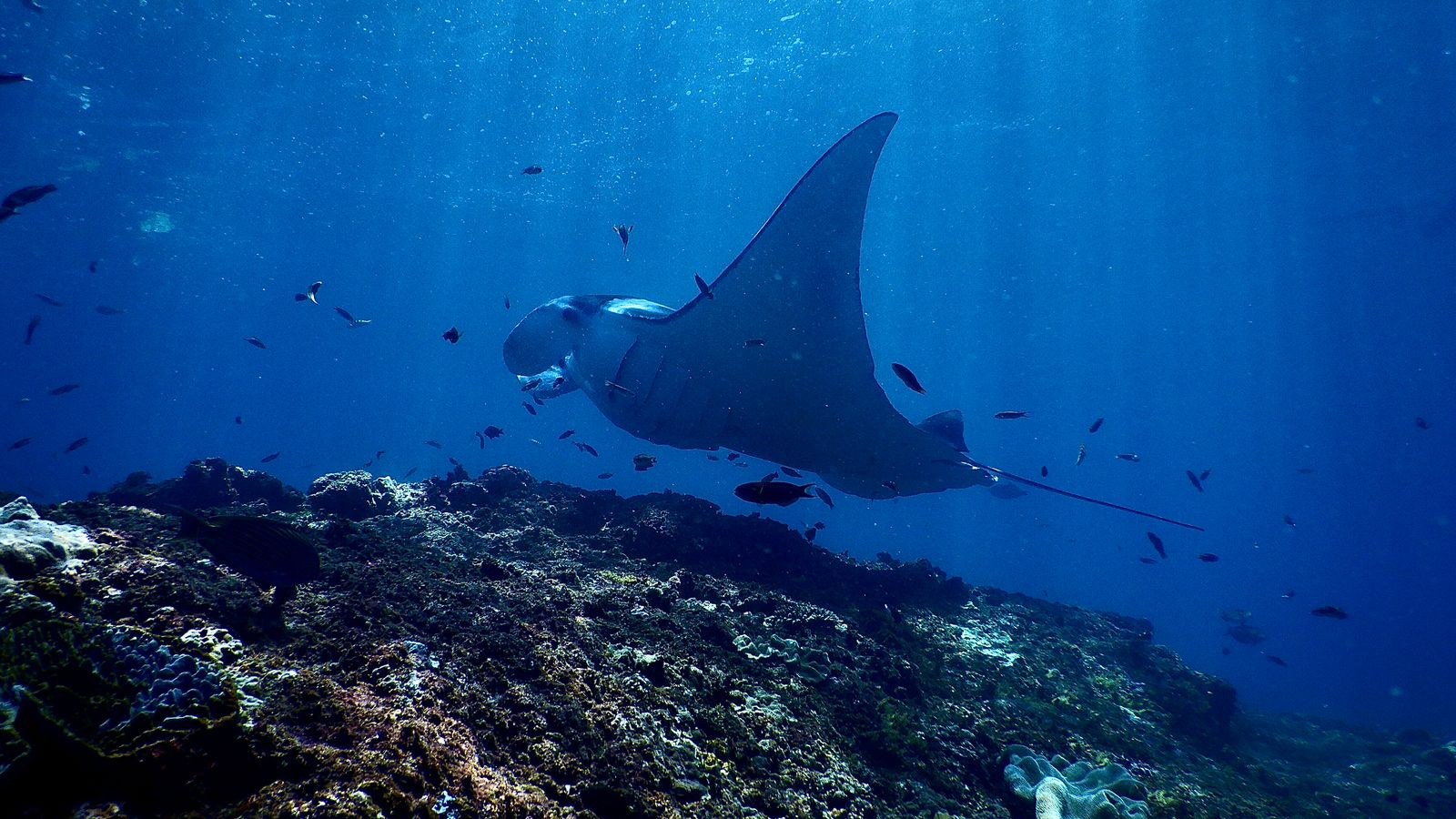
Cape Kri
Holds the world record for fish species counted on a single dive. Strong, current-fed site with constant schooling activity — barracuda, jacks, snappers.
Blue Magic
A submerged pinnacle known for manta cleaning stations, reef sharks and schooling fish. Currents can be strong; typically suited to experienced divers.
Manta Sandy
A shallow sandy cleaning station considered one of the most reliable places in the region to see reef mantas up close, tide-dependent.
Melissa's Garden
A shallow coral garden with a wide range of hard, soft and hydrocoral growth — often used to showcase Raja Ampat's overall reef diversity.
Magic Mountain
A remote seamount with reef and occasional oceanic manta activity, reachable mainly by liveaboard given its distance from any port.
Arborek Jetty
A shallow jetty site with schooling trevally and sweetlips, gentle enough to suit snorkelers and less experienced divers.
Beyond diving
Topside activities that make Raja Ampat workable for mixed groups of divers and non-divers.
Piaynemo and Wayag viewpoints
Short hikes to platforms overlooking clusters of karst islands — the classic Raja Ampat postcard image.
Village visits
Half-day calls at traditional communities such as Arborek, often combined with a shallow snorkel at the jetty.
Birds of paradise
A pre-dawn trek on Waigeo or Batanta to see the Red or Wilson's Bird of Paradise display, typically August–November.
Jellyfish lake and lagoons
A landlocked, stingless jellyfish lake on Misool, plus kayaking through sheltered limestone lagoons elsewhere in the archipelago.
Getting there
All Raja Ampat voyages depart from Sorong (SOQ) on West Papua's coast. Sorong has no direct international flights, so most travellers connect via Jakarta or Makassar, with an overnight stop in Bali or Jakarta common on the way out. Arriving a day before embarkation is worth planning for — domestic connections in eastern Indonesia are prone to delay. The transfer from Sorong airport to the harbour is short; operators typically arrange pickup.
Liveaboards sailing Raja Ampat
Example vessel profiles using the same listing structure as the main Liveaboards page.
Loading liveaboards…
Raja Ampat voyage guides
Practical planning topics connected to this destination, without replacing current information from the vessel operator.
Best time to sail Raja Ampat
A practical overview of seasons, sea conditions, rainfall, and the periods most commonly used for liveaboard itineraries.
Reaching Sorong
A simple planning outline for flights, arrival timing, hotel nights, and transfers before joining a Raja Ampat departure.
Komodo or Raja Ampat?
Compare the two regions by access, typical voyage length, scenery, marine life, seasonality, and common trip formats.
Raja Ampat — frequently asked questions
Independently compiled planning answers, kept current by PhinisiGO.
What is the best time to visit Raja Ampat?
October through April is the main season, with December to February considered peak — seas are calmer and manta encounters at cleaning stations are more reliable. The Dampier Strait is diveable year-round, though May to September can bring stronger swells that limit access to the northern Wayag area.
How long should a Raja Ampat trip be?
7 nights is the common minimum and typically covers one or two of the three regions. A 10–11 night itinerary allows a fuller circuit across the Dampier Strait, Wayag and Misool. Private charters can extend further, sometimes combining with the Banda Sea during the seasonal March–April or October–November crossing windows.
What certification do I need?
Requirements vary by site and operator. Stronger-current sites in the Dampier Strait (Cape Kri, Blue Magic) commonly ask for Advanced Open Water. Calmer sites — Arborek Jetty, Melissa's Garden — suit Open Water divers and snorkelers. Confirm requirements with your specific liveaboard before booking.
Is Raja Ampat suitable for non-divers?
Yes. Shallow snorkeling at sites like Arborek, the Piaynemo and Wayag viewpoint hikes, village visits, and Misool's jellyfish lake all work without scuba gear. Most liveaboards build in a mix of diving and topside time each day.
What conservation fees apply?
Visitors typically pay a Raja Ampat Marine Park entry fee on arrival, which funds reef conservation and local community programs. Whether this is included in a quoted trip price or payable separately varies by operator — worth confirming before booking.
Search Liveaboards in Raja Ampat
Compare vessel profiles, listing status, capacity and pricing basis, then send an enquiry to PhinisiGO, your first point of contact for booking.