
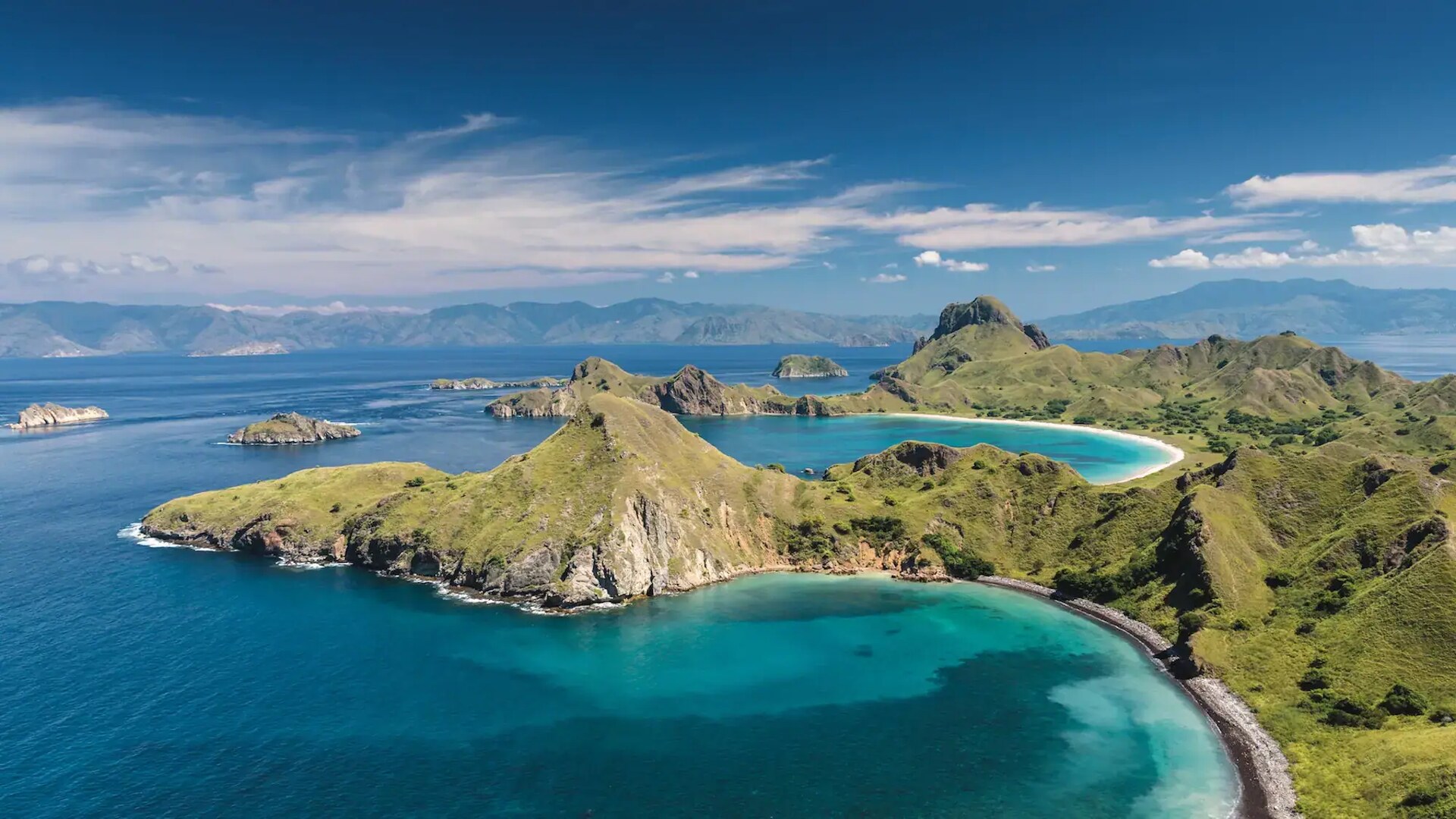
Komodo National Park
Why visit Komodo National Park
Diving and dragons get most of the attention, but Komodo works as well for travellers who want variety packed into a short trip as it does for dedicated divers.
Komodo National Park spans three large islands, Komodo, Rinca and Padar, together with more than two dozen smaller islands, across a marine protected area of more than one thousand seven hundred square kilometers between Sumbawa and Flores. Most voyages depart from Labuan Bajo and combine strong-current diving with the chance to see Komodo dragons on a guided walk. A United Nations Educational, Scientific and Cultural Organization World Heritage Site since nineteen ninety-one, the park is consistently ranked among the world's leading dive destinations. Trip length, exact route, and marine activities depend on the vessel and operator.
Few destinations let you do this much in a single day. A morning dive on a current-swept pinnacle, an afternoon hike up Padar Island for one of Indonesia's most photographed viewpoints, a walk among the world's largest living lizards on Rinca, and a swim off a pink sand beach before dinner is anchored, all realistic within one twenty-four hour period. Because Labuan Bajo is only about an hour's flight from Bali, Komodo is also the easiest of Indonesia's phinisi destinations to reach, making it a natural choice for a first liveaboard trip or a shorter break.
Short flight, big variety
About one hour from Bali to Labuan Bajo, with trips running as short as three nights, so it fits into a shorter holiday than most Indonesian liveaboard destinations.
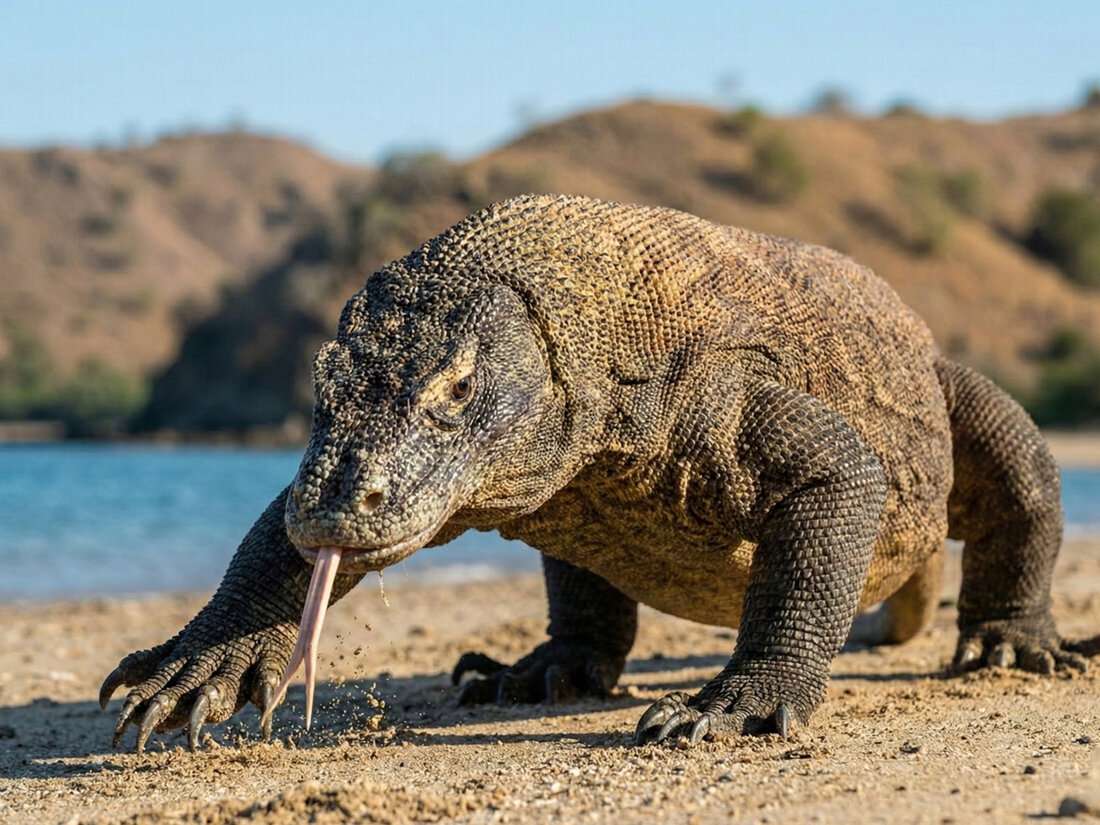
Komodo dragons on land
Ranger-led walks on Komodo or Rinca island bring you close to the world's largest living lizard, a species found nowhere else on Earth.
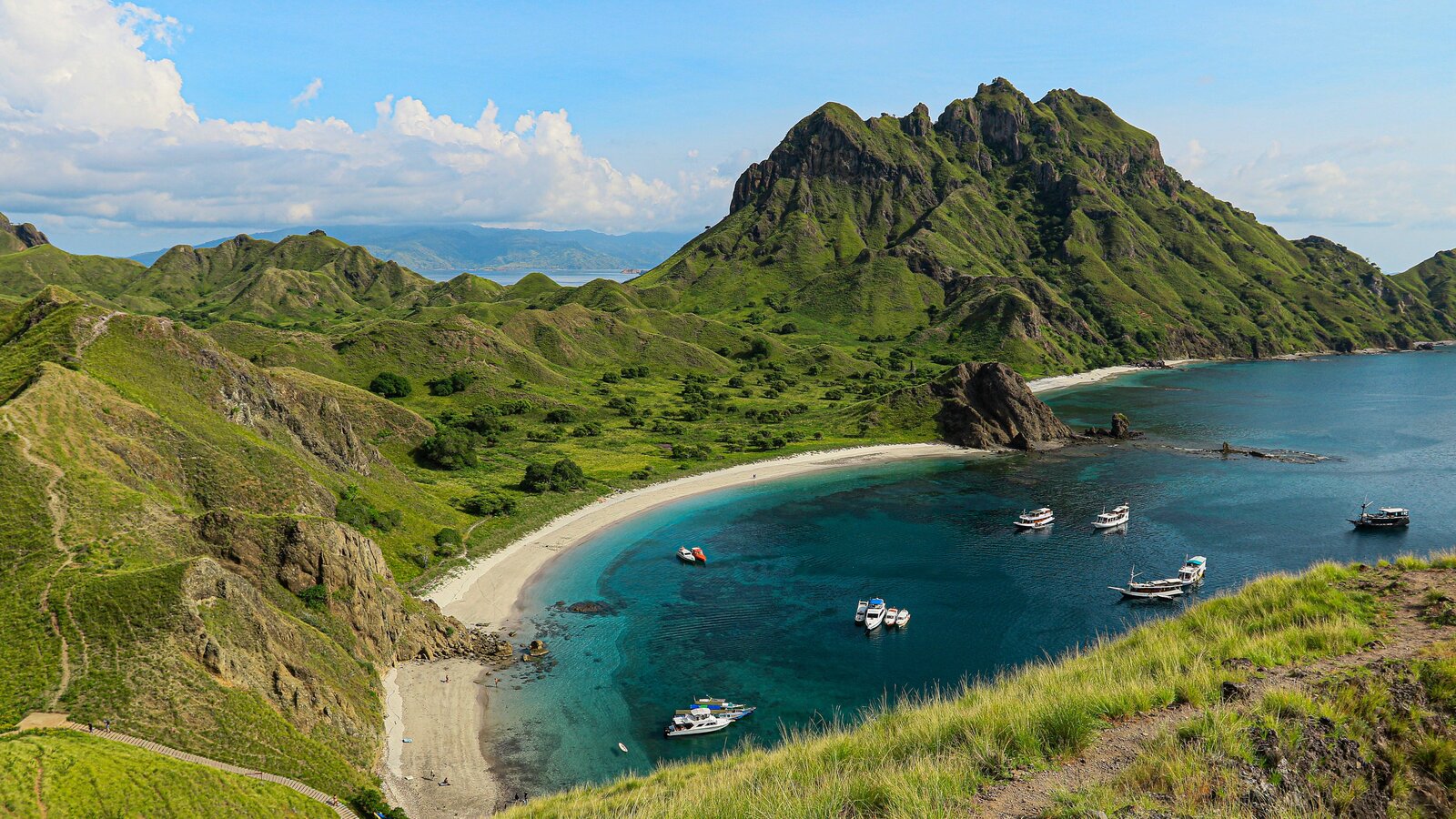
Padar Island viewpoint
A short, steep hike leads to a three-bay panorama widely considered one of Indonesia's most photographed views, best at sunrise.
Suits mixed-experience groups
Calmer sites work for newer divers and snorkelers, while current-managed sites in the north and south reward advanced divers, all inside the same park.
Three areas, one park
Komodo National Park is commonly divided into a central area, a northern area, and a southern area, each with a different character. Most itineraries of three to six nights focus on the central highlights, while longer trips of seven nights or more reach further north and south.
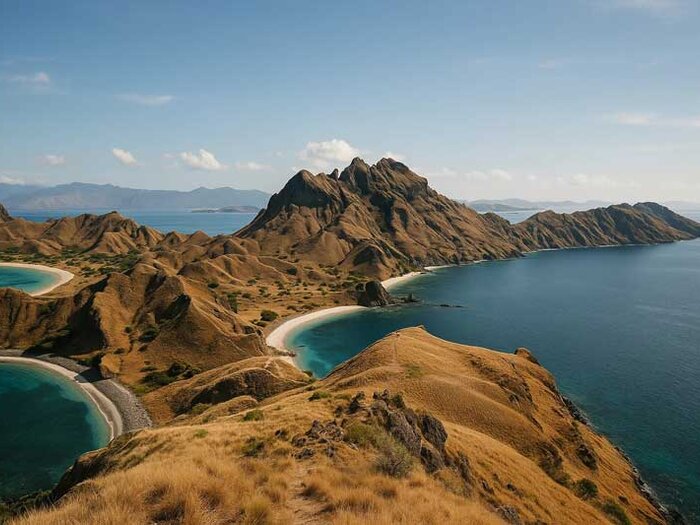
Central Highlights
The most visited part of the park, covering the classic combination of Batu Bolong, Manta Point, and Karang Makassar, alongside the Padar viewpoint hike and the Pink Beach snorkel stop. Most short trips of three to four nights stay entirely within this area.
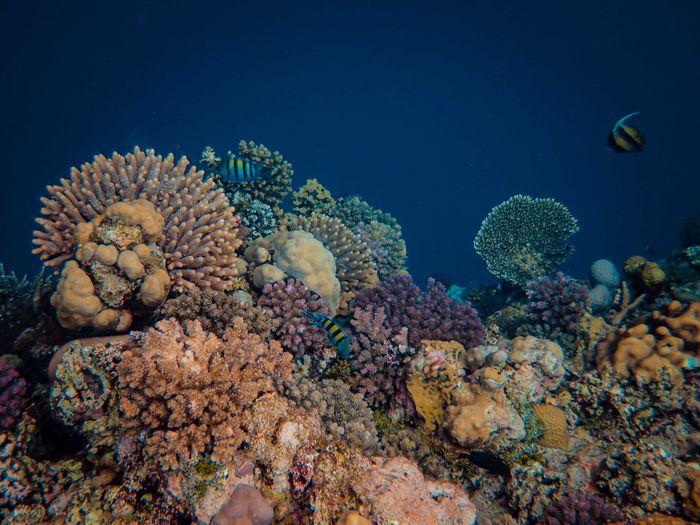
Castle Rock and Crystal Rock
Exposed, current-managed pinnacles north of Komodo Island, generally reserved for advanced divers comfortable with reef-hook technique. The reward is strong pelagic activity, including white-tip reef sharks and dense schools of fusiliers and jacks.
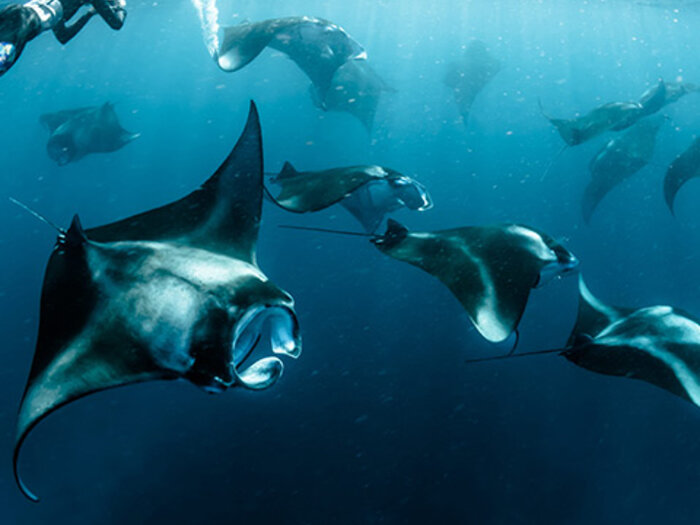
Manta Alley and Horseshoe Bay
The least crowded part of the park, reached mainly on longer itineraries. Manta Alley and Cannibal Rock offer manta encounters and dense macro life, while Horseshoe Bay is favored by underwater photographers for its critter density.
Marine life and dive sites
Compiled from public dive references and kept current by PhinisiGO.
Strong currents moving between the islands feed exceptionally rich reefs, drawing large pelagics alongside dense schools of reef fish. Sites in the north tend to run calmer and warmer; the south, closer to open ocean, brings colder upwellings and stronger drift diving.
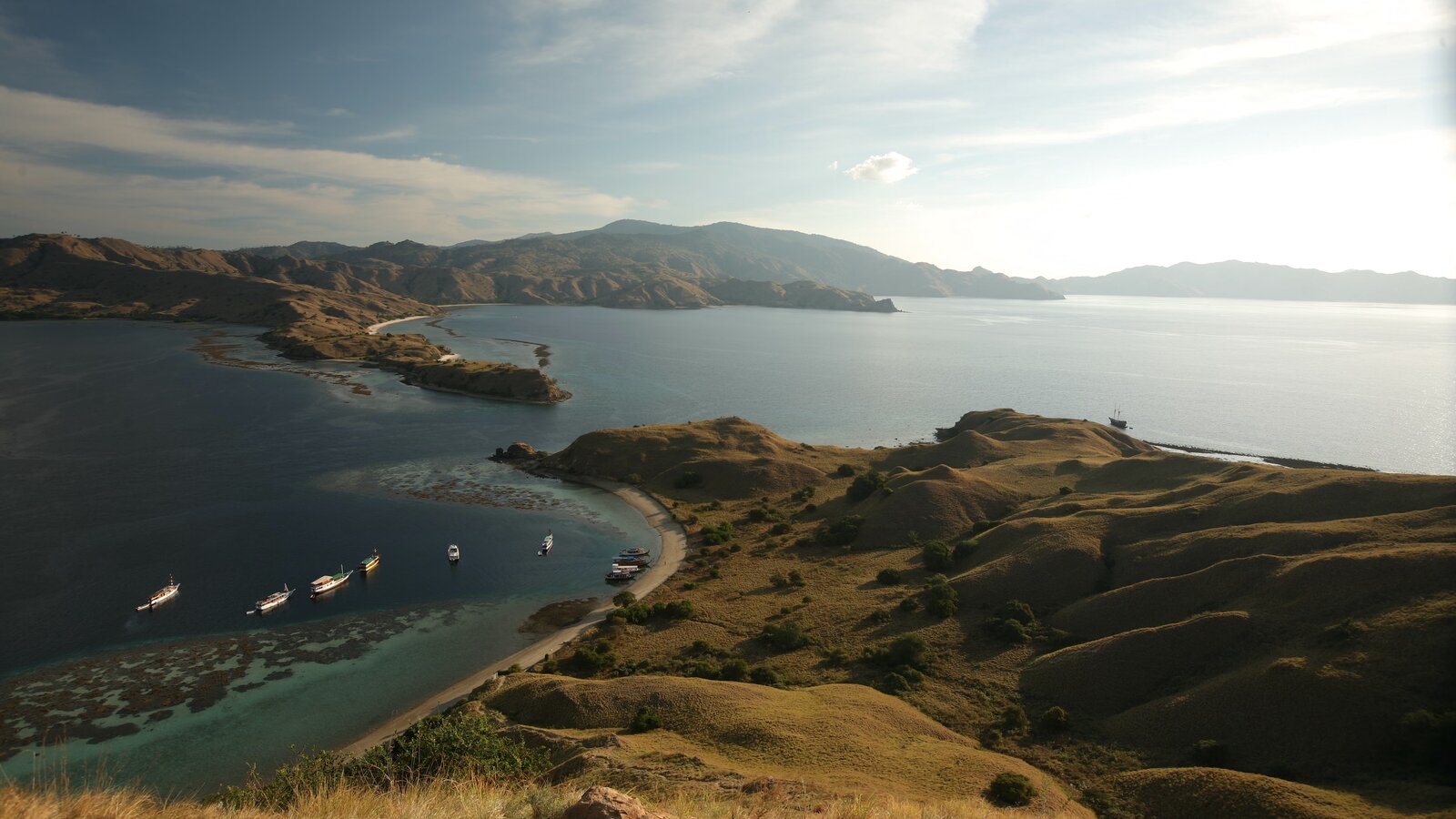
Batu Bolong
A pinnacle rising from deep water to just beneath the surface, packed with reef sharks, giant trevally, and Napoleon wrasse. Currents can be strong, suiting intermediate to advanced divers.
Manta Point
A shallow cleaning station where oceanic manta rays glide close to divers and snorkelers, one of the more reliable manta encounters in the park.
Karang Makassar
Also called Manta Alley by some operators, a broad current-swept reef suitable for Open Water divers at slack tide, with regular reef manta activity.
Castle Rock
A submerged seamount barely the size of a tennis court, exposed to powerful currents that attract large pelagic species. An advanced dive requiring reef-hook experience.
Crystal Rock
A pinnacle rising to just below the surface near the northern tip of Komodo Island, known for schooling fusiliers, sweetlips, and dramatic drift conditions.
Cannibal Rock
Part of the Horseshoe Bay area, celebrated for macro density, including fire urchins with Coleman shrimp, tiger crabs, and sea apples, making it a favorite among underwater photographers.
Beyond diving
Topside activities that make Komodo National Park workable for mixed groups of divers and non-divers.
Komodo dragon trekking
Ranger-guided walks on Komodo or Rinca island, generally an hour or two, for close but safe encounters with the world's largest lizard.
Padar Island sunrise hike
A steep but short climb to a three-bay panorama, best attempted at first light before the heat and the crowds arrive.
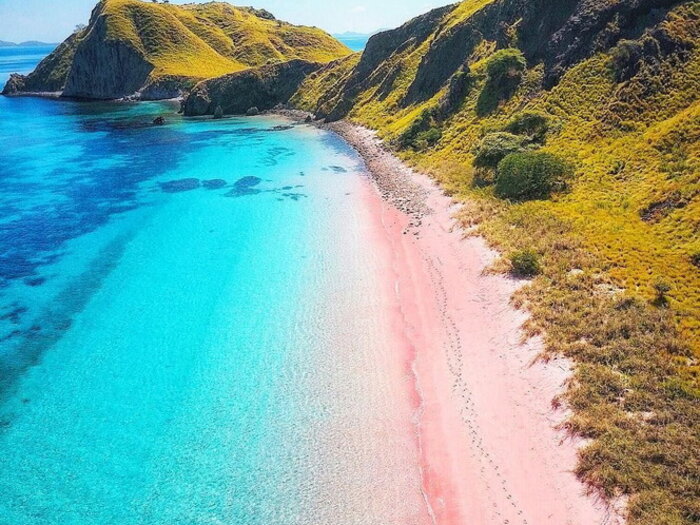
Pink Beach snorkeling
A shallow, gently sloping reef beneath a beach colored pink by crushed red coral fragments, suitable for snorkelers of any level.
Village and market visits
Some itineraries include a stop in a coastal fishing village near Labuan Bajo, offering a look at daily life outside the national park.
Getting there
All Komodo voyages depart from Labuan Bajo (LBJ) on the western tip of Flores. Labuan Bajo is well connected, with direct flights from Bali (DPS) and Jakarta (CGK) taking around one hour and just over two hours respectively, making Komodo the most accessible of Indonesia's major phinisi destinations. Most travellers fly in on the morning of embarkation, though an overnight stay the night before is a safer plan given the possibility of delays. The transfer from Labuan Bajo airport to the harbor is short, typically arranged directly by the liveaboard operator.
Liveaboards sailing Komodo National Park
Example vessel profiles using the same listing structure as the main Liveaboards page.
Loading liveaboards…
Komodo National Park voyage guides
Practical planning topics connected to this destination, without replacing current information from the vessel operator.
Best time to sail Komodo
A practical overview of seasons, sea conditions, rainfall, and the periods most commonly used for liveaboard itineraries.
Reaching Labuan Bajo
A simple planning outline for flights, arrival timing, hotel nights, and transfers before joining a Komodo departure.
Komodo or Raja Ampat?
Compare the two regions by access, typical voyage length, scenery, marine life, seasonality, and common trip formats.
Komodo National Park — frequently asked questions
Independently compiled planning answers, kept current by PhinisiGO.
What is the best time to visit Komodo National Park?
April through November is the main season, avoiding the wet season months of December through March when seas are rougher. Peak manta activity at central sites is often reported around the December to February wet season transition, so some operators run limited trips then despite the weather.
How long should a Komodo trip be?
Three to four nights covers the central highlights, including Batu Bolong, Manta Point, the Padar viewpoint, and Pink Beach. A longer trip of seven nights or more reaches the northern sites around Castle Rock and the southern sites around Manta Alley and Horseshoe Bay.
What certification do I need?
Requirements vary by site. Castle Rock, Crystal Rock, and the strongest sections of Batu Bolong are advanced dives requiring reef-hook experience. Karang Makassar and other central sites are accessible to Open Water divers at the right tide. Confirm requirements with your specific liveaboard before booking.
Can I see Komodo dragons without diving?
Yes. Ranger-guided walks on Komodo or Rinca island are a topside excursion included on most itineraries, entirely separate from the diving program, and suitable for non-divers and snorkelers traveling in the same group.
Is Komodo suitable for a first liveaboard trip?
Many operators consider it one of the easier entry points, given the short flight from Bali, trip lengths as short as three nights, and a mix of calmer sites for newer divers alongside the stronger current sites for those seeking more challenge.
Search Liveaboards in Komodo National Park
Compare vessel profiles, listing status, capacity and pricing basis, then send an enquiry to PhinisiGO, your first point of contact for booking.