Cenderawasih Bay
Why visit Cenderawasih Bay
Cenderawasih Bay offers a wildlife encounter that exists nowhere else on the planet, on a schedule that never really has an off-season.
Cenderawasih Bay is Indonesia's largest marine protected area, a vast body of water on the northern coast of West Papua, nearly four hundred kilometers across at its widest point. It is the only place on Earth with a documented resident, year-round whale shark population, concentrated around the traditional fishing platforms of Kwatisore Bay near Nabire. Most voyages are ten to twelve nights, reached through Nabire, Manokwari, or Biak, and combine whale shark encounters with World War Two wreck diving and largely unexplored reef systems. Trip length, exact route, and marine activities depend on the vessel and operator.
Most whale shark destinations depend on migration timing, a chance encounter, or a lucky season. Cenderawasih Bay is different: the whale sharks living around Kwatisore Bay's fishing platforms are present every month of the year, feeding on baitfish drawn in by the fishermen's nets, close to the surface in clear water. Beyond the whale sharks, the bay's genuine isolation, more than fourteen thousand five hundred square kilometers with only one land-based dive center, means most of what lies beneath the surface has barely been explored.
Whale sharks, every month of the year
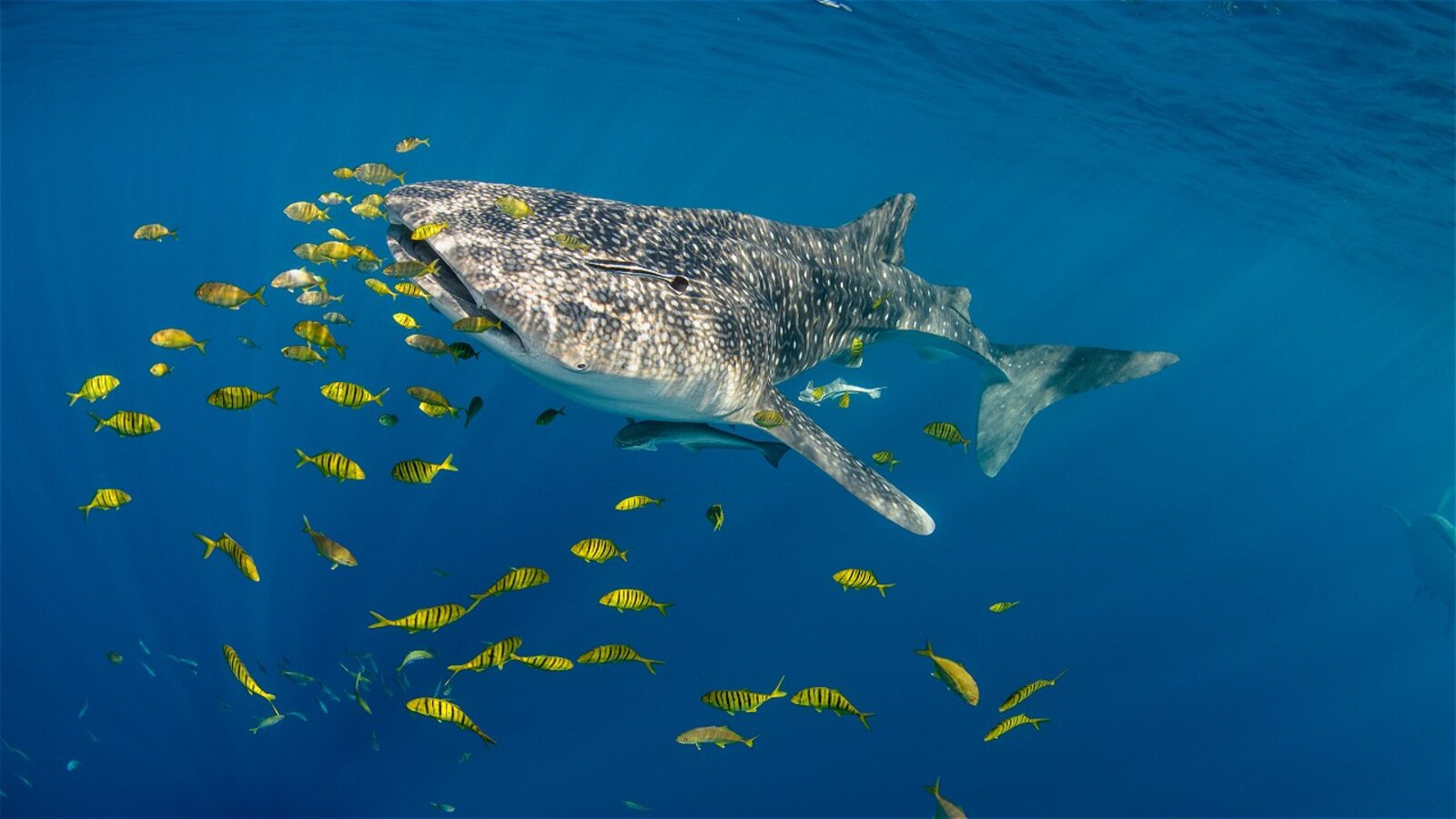
The Kwatisore Bay aggregation is recorded in every month, unlike seasonal whale shark destinations elsewhere in the world.
Encounters accessible to snorkelers
Whale sharks feeding near the surface at the bagan platforms can be experienced without scuba certification, suiting mixed groups of divers and non-divers.
Genuine isolation
More than fourteen thousand square kilometers of bay with a single land-based dive center, meaning much of the reef remains only lightly explored.
Birds of paradise on Yapen Island
A topside trekking excursion for the region's namesake bird, adding a rare land-based highlight to a trip built mainly around the water.
The shape of a Cenderawasih Bay trip
Most itineraries dedicate several days to the whale shark encounter, then use the remaining time to explore the bay's more remote and less-documented reef systems and wreck sites.
The Whale Shark Platforms
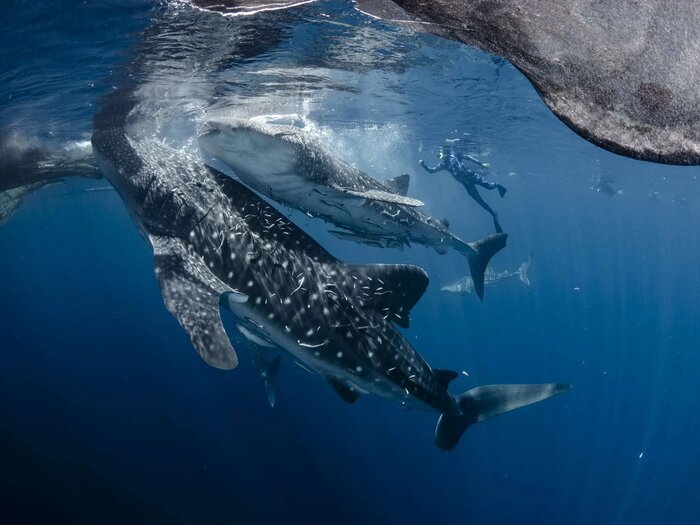
Traditional wooden fishing platforms called bagans, where whale sharks gather year-round to feed on baitfish, offering some of the world's most consistent whale shark encounters, typically in early morning light.
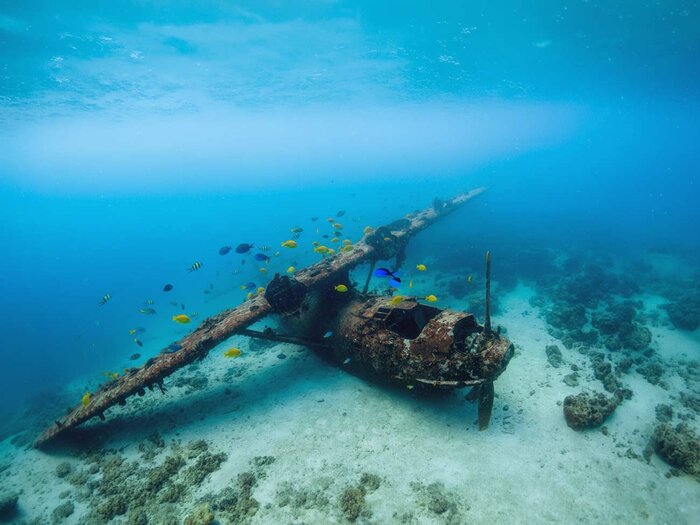
Scattered Reefs and Wrecks
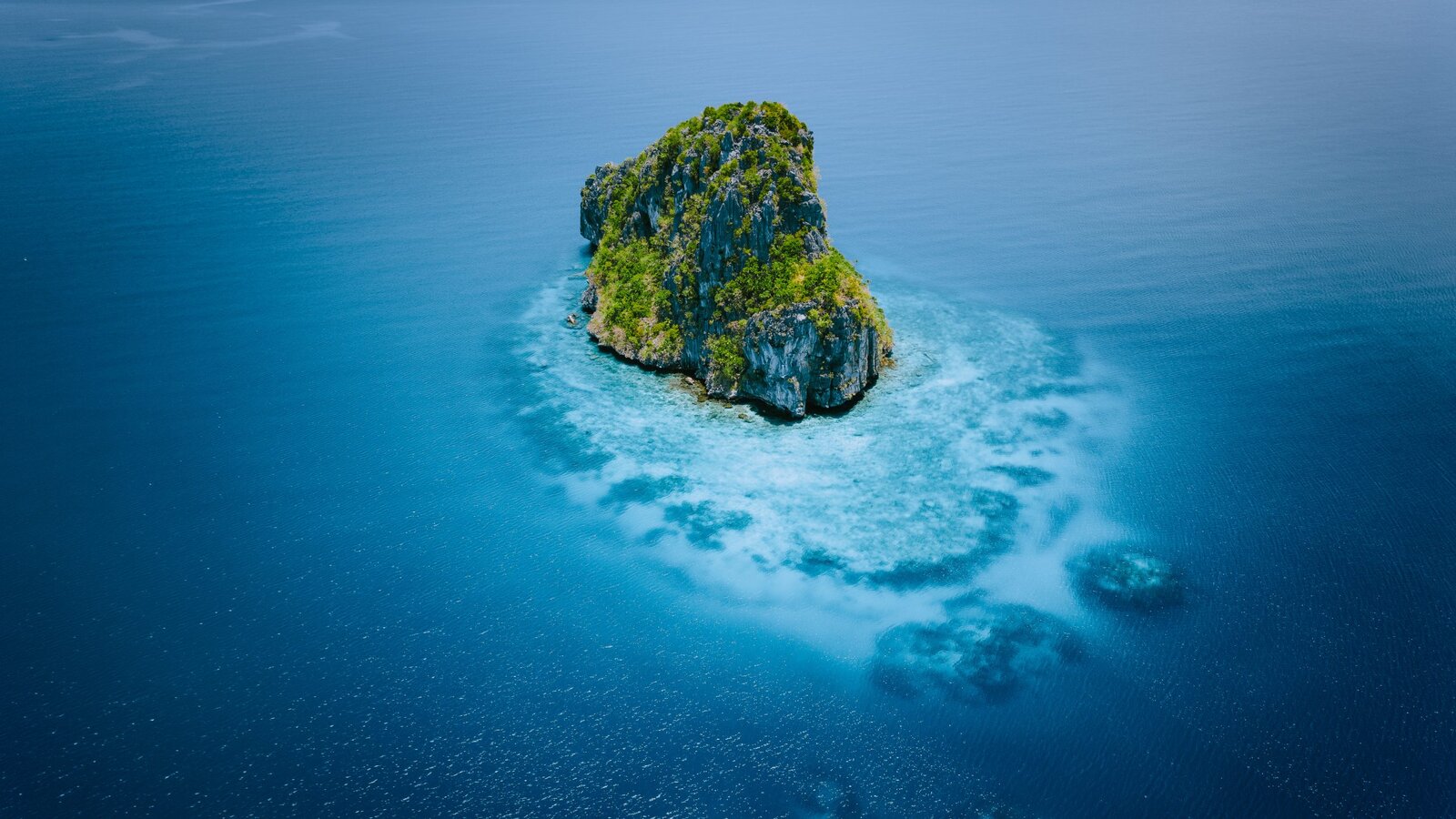
More than twenty smaller islands scattered mostly through the eastern half of the bay, protected from extreme waves and currents by the larger islands at the bay's mouth, and home to several World War Two Japanese wrecks.
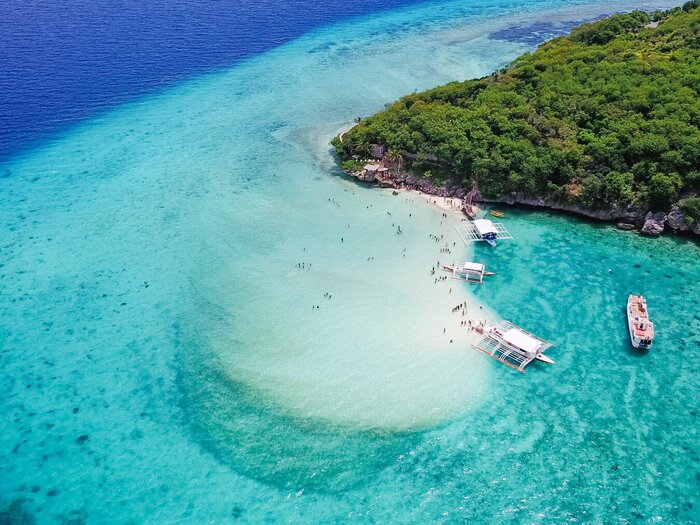
Gateway Coastline
The bay's two main population centers and common embarkation or disembarkation points, with Nabire closest to the Kwatisore whale shark platforms and Manokwari serving routes further north toward the bay's mouth.
Marine life and dive sites
Compiled from public dive references and kept current by PhinisiGO.
Cenderawasih Bay's isolation from the rest of Indonesia's reef systems, cut off behind the Bird's Head Peninsula for millions of years, has produced a striking number of fish species found nowhere else. The whale sharks are the headline, but the endemic reef life is what keeps researchers coming back.
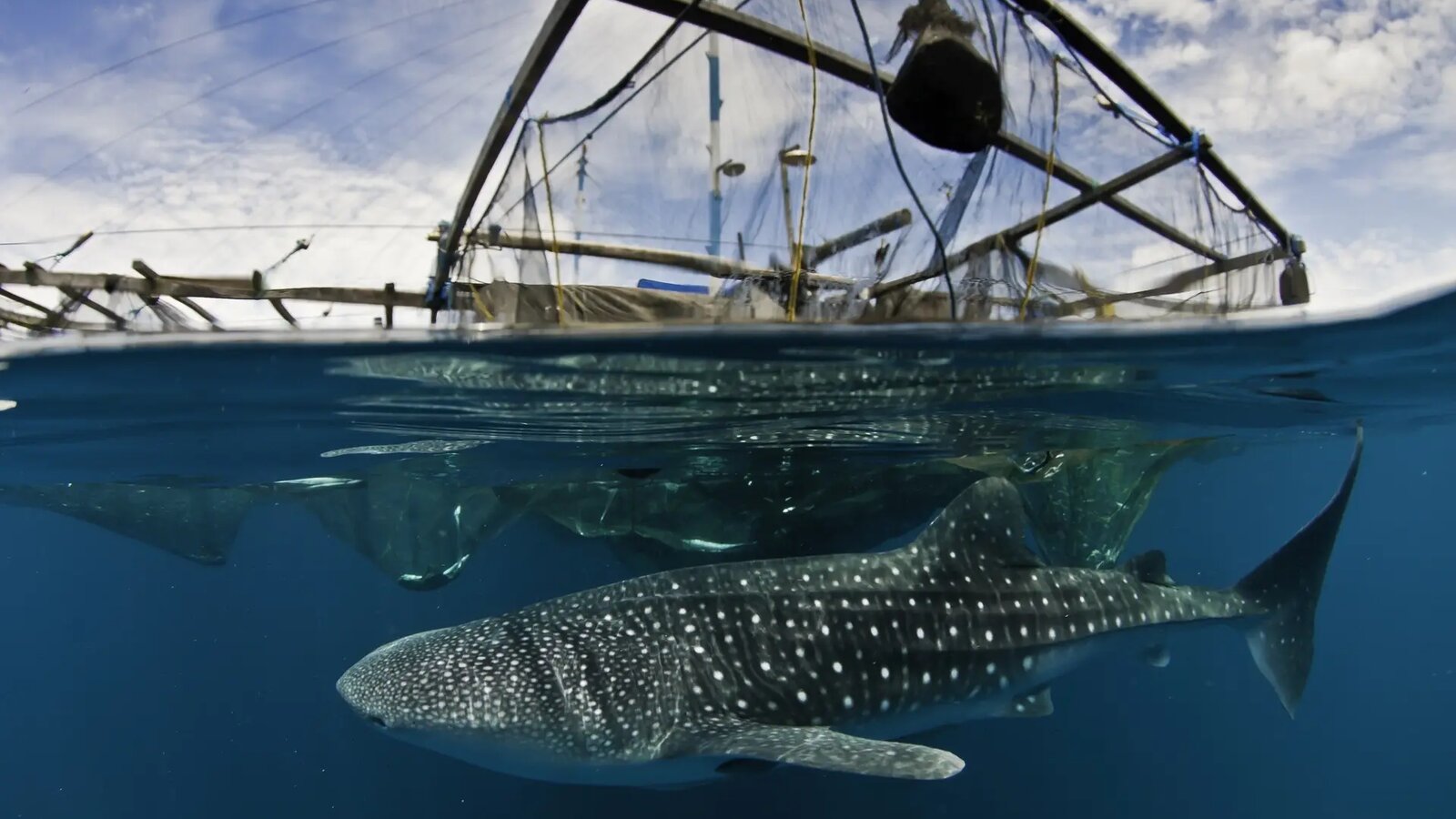
The Bagan Platforms
Traditional fishing platforms where whale sharks gather year-round to feed, offering close encounters near the surface accessible to both divers and snorkelers.
World War Two Wreck Sites
Japanese ship and aircraft wrecks resting at several depths across the bay, adding a historical dimension to the reef and pelagic diving.
Tanjung Mangguar
Sites featuring giant barrel sponges and vibrant marine life, with the possibility of a night dive on select itineraries.
Pulau Sodompari
A half kilometer reef known for pelagic diversity, including schooling barracuda and giant trevally, near the Wandammen Peninsula.
Pulau Roon and Pulau Ribbon
Sites featuring soft corals, sea fans, and a WWII downed aircraft in shallow water, among the bay's more varied dive profiles.
Endemic Fish Sites
Locations known for species found only within the bay, a consequence of its long isolation from the open Pacific Ocean during past periods of lower sea levels.
Beyond diving
Topside activities that make Cenderawasih Bay workable for mixed groups of divers and non-divers.
Birds of paradise trekking
A trek on Yapen Island offers the chance to see birds of paradise in the wild, best attempted from July to October when conditions are dry.
Whale shark snorkeling
Non-divers can experience the bagan platform encounters from the surface, without needing scuba certification.
Village and cultural visits
Stops at local villages around the bay offer a look at traditional Papuan culture and the region's history.
Remote coastal scenery
The bay's scattered islands and largely undeveloped coastline offer quiet exploration between dive and snorkel sessions.
Getting there
Cenderawasih Bay is reached by flying into Nabire (NBX), Manokwari (MKW), or Biak (BIK), typically via Jakarta (CGK) or Bali (DPS) with one or two connections. Liveaboard is the only practical way to dive the bay in any depth, since there is only one land-based dive center and dive sites are spread across more than fourteen thousand square kilometers of water. Some itineraries run as a crossing from Raja Ampat through Sorong, combining both destinations on an extended West Papua route. A buffer day before embarkation is strongly recommended given the frequency of delays on flights into eastern Indonesia.
Liveaboards sailing Cenderawasih Bay
Example vessel profiles using the same listing structure as the main Liveaboards page.
Loading liveaboards…
Cenderawasih Bay voyage guides
Practical planning topics connected to this destination, without replacing current information from the vessel operator.
Best time to sail Cenderawasih Bay
A practical overview of seasons, sea conditions, and the periods most commonly used for liveaboard itineraries, alongside a note on why the whale sharks are not seasonal.
Reaching Nabire, Manokwari or Biak
A simple planning outline for flights, arrival timing, hotel nights, and transfers before joining a Cenderawasih Bay departure.
Cenderawasih Bay or Triton Bay?
Compare the two West Papua whale shark destinations by access, typical voyage length, encounter style, and common trip formats.
Cenderawasih Bay — frequently asked questions
Independently compiled planning answers, kept current by PhinisiGO.
What is the best time to visit Cenderawasih Bay?
The whale sharks are present year-round, so there is no bad time for the primary encounter. July to October generally offers the calmest seas and highest visibility for diving and liveaboard comfort overall, while November to April brings slightly rougher open-water conditions for the transit to Kwatisore Bay.
Do I need to be a certified diver to see the whale sharks?
No. The bagan platform encounters happen near the surface and are accessible to snorkelers as well as certified divers, making Cenderawasih Bay one of the more inclusive whale shark destinations for mixed groups.
How long should a Cenderawasih Bay trip be?
Most itineraries run ten to twelve nights, with three to four days typically dedicated to the Kwatisore Bay whale shark platforms and the remainder spent exploring the bay's wider reef and wreck sites.
What certification do I need for Cenderawasih Bay diving beyond the whale sharks?
There is no strict experience limit, though due to the remote location, most divers who join trips are Advanced certified with fifty or more logged dives, largely to ensure compatible buddy groups rather than any specific site requirement.
Can I combine Cenderawasih Bay with Raja Ampat?
Yes. Some liveaboard itineraries run as an extended crossing from Sorong, combining Raja Ampat and Cenderawasih Bay on a single longer trip, though this requires a more flexible travel schedule than either destination alone.
Search Liveaboards in Cenderawasih Bay
Compare vessel profiles, listing status, capacity and pricing basis, then send an enquiry to PhinisiGO, your first point of contact for booking.