Alor
Why visit Alor
Alor rewards travellers who want an unpolished, less-visited corner of Indonesia as much as it rewards experienced divers.
Alor sits in East Nusa Tenggara, part of the Pantar Strait between the Flores and Savu Seas, an area difficult to reach other than by liveaboard. Most voyages depart from Maumere on Flores, and combine strong-current diving with world-class muck diving in Kalabahi Bay, all within the range of a single day's diving. The strait's currents bring cold-water upwellings that support both Alor's macro life and its seasonal chance of schooling hammerhead sharks. Trip length, exact route, and marine activities depend on the vessel and operator.
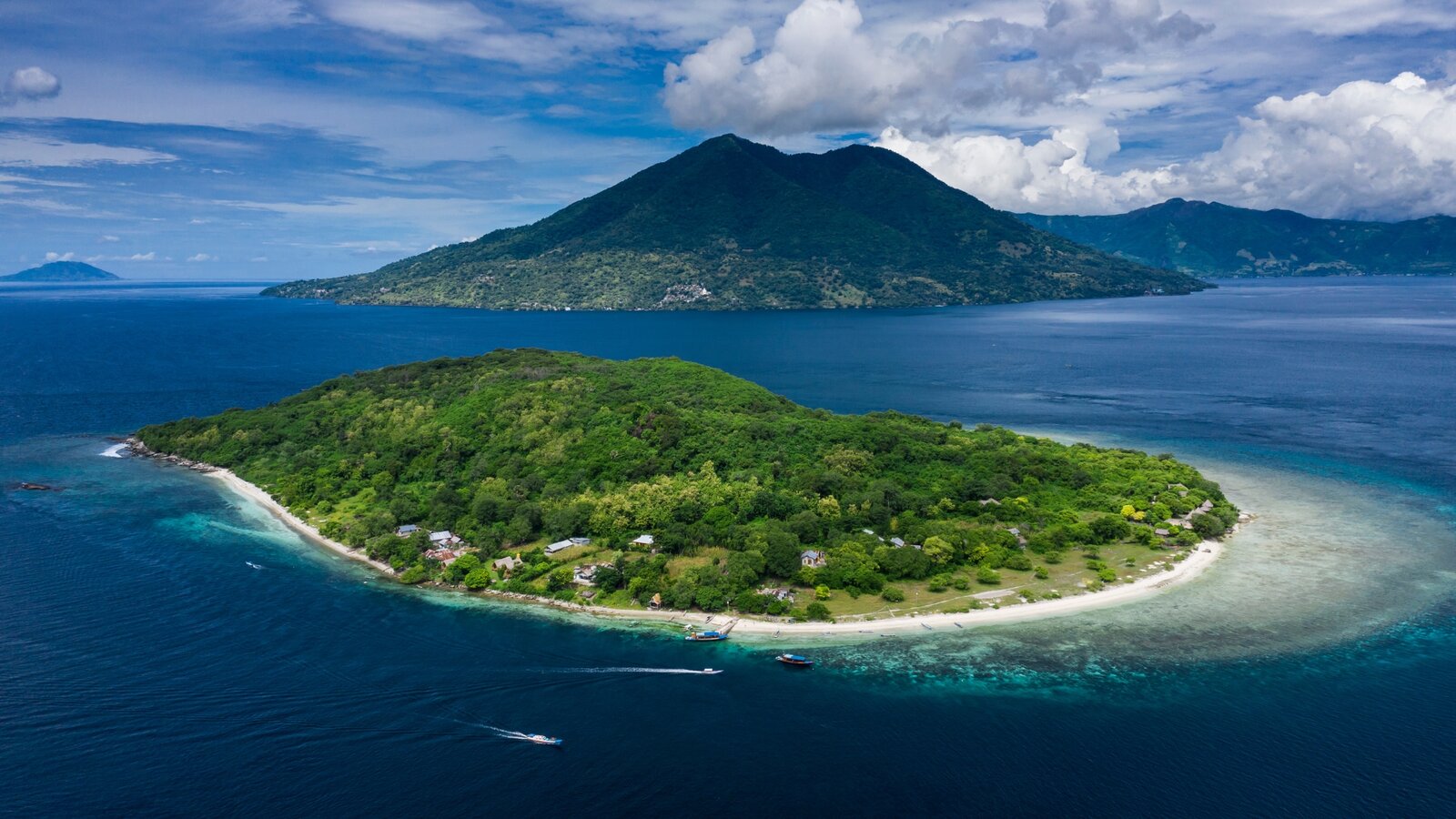
With more than seventy underwater locations reachable mainly by liveaboard, Alor remains one of Indonesia's genuine diving frontiers, still building its reputation rather than resting on one. Above the water, the East Nusa Tenggara archipelago carries its own distinct culture, and several operators build in village visits to see traditional dance and centuries-old ikat weaving. The active volcano Komba, visible from the deck at night, adds a dramatic backdrop few other Indonesian itineraries can match.
A genuine diving frontier
Over seventy underwater locations across the Alor archipelago, most reachable only by liveaboard, keep the region well off the standard circuit.
Cultural stops beyond diving
Village visits built into several itineraries showcase traditional dance and ikat weaving found nowhere else in Indonesia.
Komba volcano at night
An active volcano roughly fifty nautical miles from Alor, occasionally visible erupting from the deck after dark on itineraries that pass nearby.
Everything in one day
Current-swept pinnacles, sheltered muck sites, and colorful reef walls can all be dived within a single day, an unusual range of conditions for one destination.
The three faces of Alor
Alor's diving splits naturally into three distinct styles, all findable within a compact area, which is part of what distinguishes it from other Indonesian destinations.
Current Alley and Kal’s Dream
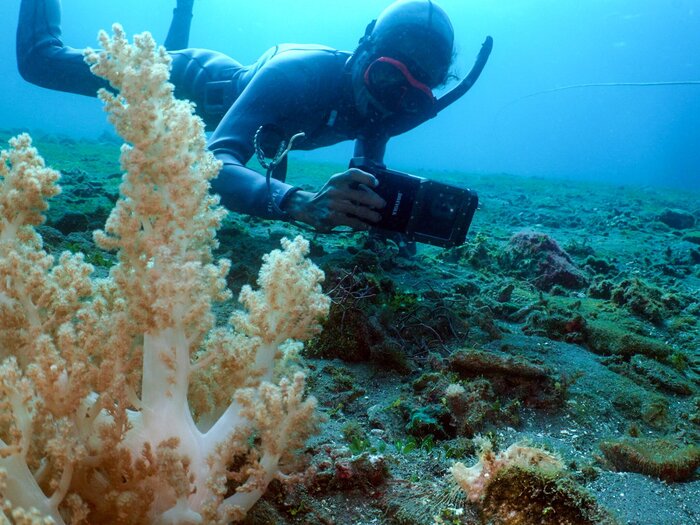
A narrow, powerful corridor between the Flores and Savu Seas, producing strong and occasionally unpredictable currents. This is Alor's best chance for schooling hammerhead sharks, particularly from October to November, and is suited to confident, experienced divers.
Muck Diving Central
A sheltered bay on the black volcanic sand, considered one of Indonesia's finest muck diving locations, comparable by some divers to Lembeh Strait, and home to rhinopias, mimic octopus, and the elusive bobbit worm.
Red Sand and Babilonia
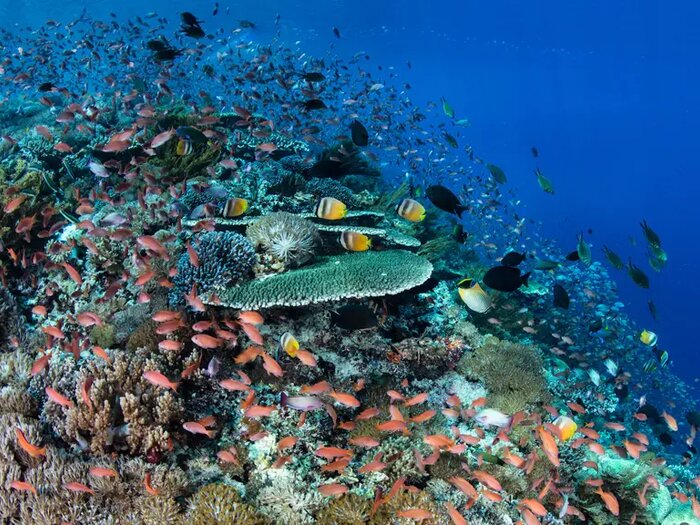
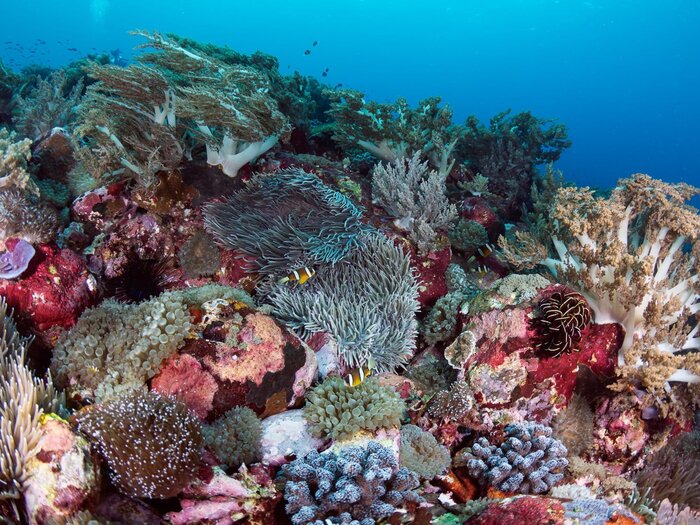
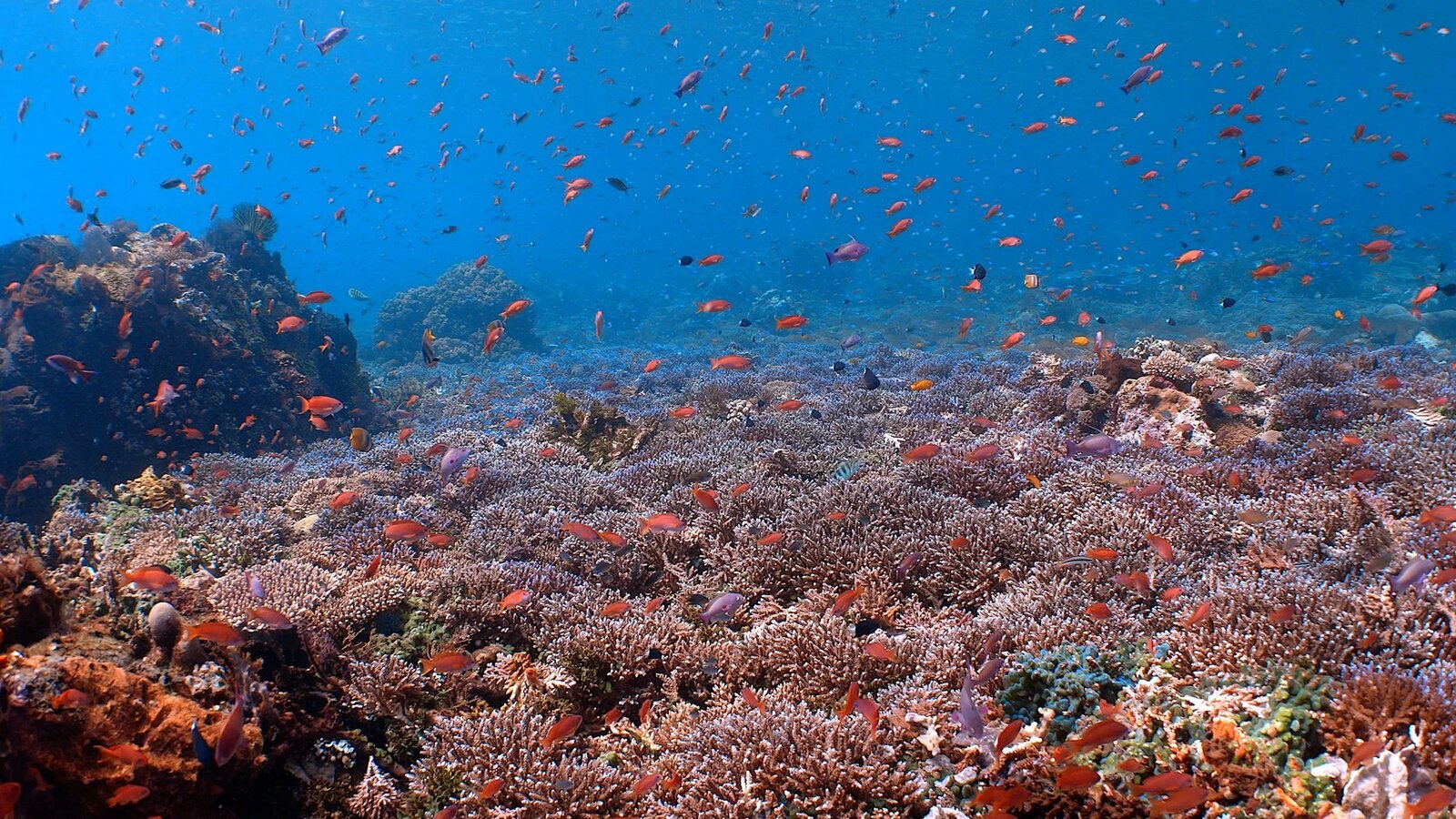
Healthy hard coral fields and colorful reef fish schools that several experienced divers rate as comparable to the reefs of Raja Ampat, Komodo, and Triton Bay, without those destinations' visitor numbers.
Marine life and dive sites
Compiled from public dive references and kept current by PhinisiGO.
The Pantar Strait funnels cold, nutrient-rich water between Alor and its neighboring islands, which is what makes the current-swept reefs here so productive. Kalabahi Bay's muck diving sites, by contrast, are calm and shallow, better suited to macro photography than drift diving.
Kal's Dream
A drift site with powerful, unpredictable currents, considered one of Alor's best chances for schooling hammerhead sharks, particularly from October to November.
Current Alley
A strong current site producing exhilarating drift dives, attracting large pelagics including hammerheads, barracuda, and occasional thresher sharks.
Kalabahi Muck Sites
Black volcanic sand slopes home to rhinopias, mimic octopus, wunderpus, and blue-ringed octopus, widely rated among Indonesia's best muck diving locations.
Red Sand and Babilonia
Fields of healthy hard coral and colorful reef fish schools, rated by experienced divers as rivaling Raja Ampat, Komodo, and Triton Bay for reef condition.
The Cathedral
A dramatic site featuring underwater rock formations, caves, and swim-throughs, among Alor's more visually striking dive sites.
Komba Island
An active volcanic island roughly fifty nautical miles from Alor, with impressive coral growth on its slopes and the rare chance to see the volcano erupting after dark from the liveaboard.
Beyond diving
Topside activities that make Alor workable for mixed groups of divers and non-divers.
Traditional village visits
Several itineraries include a stop at a local Alorese village to see traditional dance and centuries-old ikat weaving.
Komba volcano viewing
On itineraries passing nearby, the active crater of Komba Island is sometimes visible erupting from the deck after dark.
Muck diving photography
Kalabahi Bay's macro life makes it a strong stop for underwater photographers, even on days built around fewer, longer dives.
Remote island scenery
The wider Alor archipelago and Pantar Strait offer dramatic volcanic landscapes rarely visited outside of liveaboard itineraries.
Getting there
Most Alor liveaboards depart from Maumere (MOF) on Flores, reachable via a connecting flight from Bali (DPS) or Jakarta (CGK). Some liveaboards instead depart from Kalabahi on Alor itself, which requires an additional connection through Kupang (KOE) to Mali Airport (ARD). From either airport, the liveaboard operator typically arranges the transfer to the harbor. Arriving a day before embarkation is worth planning for, given the possibility of delays on eastern Indonesian domestic routes.
Liveaboards sailing Alor
Example vessel profiles using the same listing structure as the main Liveaboards page.
Loading liveaboards…
Alor voyage guides
Practical planning topics connected to this destination, without replacing current information from the vessel operator.
Best time to sail Alor
A practical overview of seasons, sea conditions, rainfall, and the periods most commonly used for liveaboard itineraries.
Reaching Maumere
A simple planning outline for flights, arrival timing, hotel nights, and transfers before joining an Alor departure.
Alor or Banda Sea?
Compare the two remote, current-driven destinations by access, typical voyage length, marine life, seasonality, and common trip formats.
Alor — frequently asked questions
Independently compiled planning answers, kept current by PhinisiGO.
What is the best time to visit Alor?
April through November brings calmer seas for the crossing from Maumere and the most consistent conditions overall. October to November is the peak window specifically for schooling hammerhead sharks at sites like Current Alley and the southern Pantar Strait.
How long should an Alor trip be?
Most trips run seven to ten nights, covering the Pantar Strait, Kalabahi Bay's muck sites, and central Alor's reef systems. Longer thirteen-night itineraries sometimes combine Alor with the Banda Sea.
What certification do I need?
The Pantar Strait's currents can be strong and occasionally unpredictable, so comfort with drift diving and buoyancy control in moving water is important. Kalabahi Bay's muck sites are calmer and more accessible to less experienced divers.
What wetsuit thickness do I need for Alor?
Surface waters can reach a comfortable twenty-eight degrees Celsius, but deep upwellings at southern sites can drop temperatures to twenty degrees Celsius or lower during a single dive. A five millimeter wetsuit with a hood is commonly recommended.
Is Alor good for underwater photography?
Yes, particularly for macro subjects. Kalabahi Bay's muck sites are compared favorably to Lembeh Strait by experienced divers, and the region has documented over one hundred nudibranch species alongside rhinopias, frogfish, and rare octopus species.
Search Liveaboards in Alor
Compare vessel profiles, listing status, capacity and pricing basis, then send an enquiry to PhinisiGO, your first point of contact for booking.